

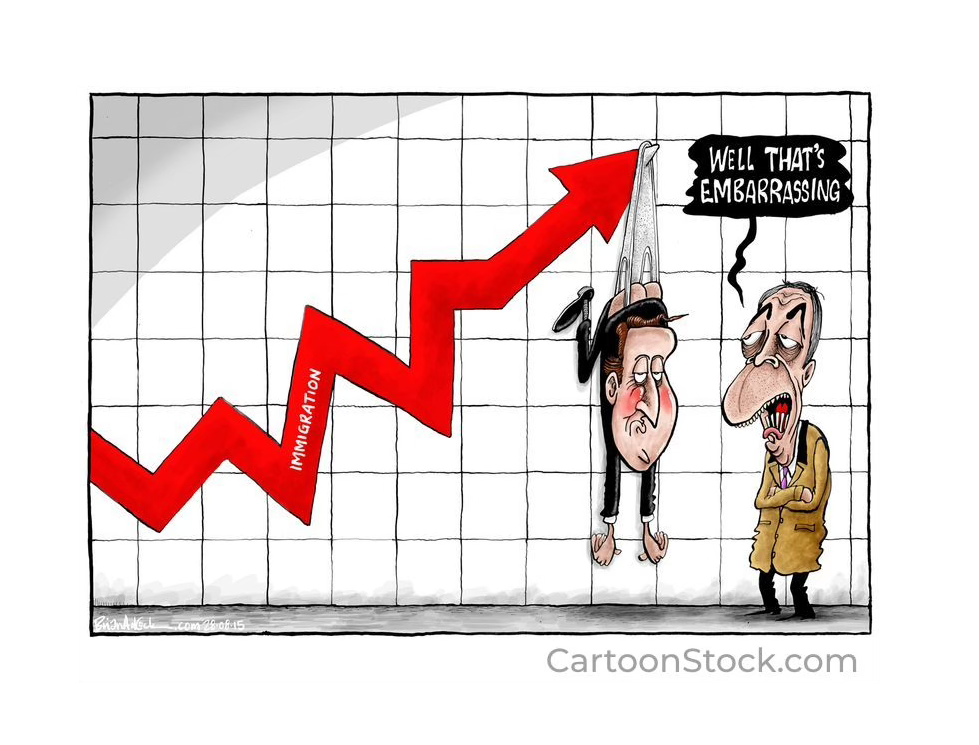
Although I live in the United States, I remain a Brit at heart — and I watched the Brexit drama unfold with a mixture of disbelief and dread. From the moment the referendum was announced, it was obvious that Britain was being invited to perform major surgery on itself without anaesthetic or a clear diagnosis.
The impulse behind Brexit was understandable. The British people wanted control: over their borders, their laws, and their national destiny. They were weary of bureaucrats in Brussels and suspicious of politicians in Westminster who seemed unable or unwilling to say “No.” Yet the movement that promised national renewal was led by men who never levelled with the public about what leaving the European Union actually entailed.
The Illusion of Easy Sovereignty
Slogans made it sound simple. Outside the EU, we were told, Britain would save billions in contributions, strike new trade deals across the globe, and manage immigration on its own terms. In reality, disentangling from Europe was far messier.
By 2016, Britain’s economy, laws, and institutions were woven into the EU’s fabric. Nearly half of British trade went to European markets. Thousands of laws — from product safety to environmental standards — depended on EU frameworks. Tearing them out overnight was like removing the wiring from a house while the power was still on.
Legally, the UK regained sovereignty. Practically, it remained bound by the gravitational pull of its largest trading partner. Businesses still follow EU standards to keep access to European customers, and Northern Ireland still lives under EU customs rules to prevent a hard border with the Republic.
The Referendum That Should Never Have Happened
David Cameron’s decision to hold the referendum was one of the most reckless gambles in modern British history. It was never about national strategy; it was about party management. Hoping to silence the Eurosceptic wing of the Conservatives and fend off Nigel Farage, Cameron bet the country on a plebiscite he assumed he would win.
The result — a narrow victory for Leave — left Britain divided, its political class discredited, and its economy uncertain. Voters were unhappy with the status quo but lacked a clear understanding of what the alternative would cost. Many wanted a protest, not a revolution. What they got was years of paralysis and declining trust in government.
Thatcher’s Warning, Ignored
Margaret Thatcher saw this danger long before it arrived. She valued Europe as a marketplace but distrusted it as a political project. In her 1988 Bruges speech she warned, “We have not rolled back the frontiers of the state in Britain only to see them reimposed at a European level.”
But Thatcher was no isolationist. She believed in influence through engagement, not withdrawal. She would have fought to reform the EU from within — using Britain’s leverage, not abandoning it. She understood that independence without economic strength is an illusion. Hers was a sovereignty grounded in realism, not rhetoric.
The Consequences of Entanglement
Brexit delivered independence on paper but fragility in practice. The promised “Brexit dividend” vanished under the weight of new bureaucracy. Customs checks, supply-chain friction, and labor shortages, have driven up costs. Investment has cooled. Even immigration, the central grievance of the Leave campaign, has increased to record highs — only from different parts of the world.
The social fabric has frayed too. The debate split families, regions, and generations. Scotland talks again of independence. Northern Ireland remains an unresolved compromise. The country feels smaller, angrier, and less confident than before.
A Nation Led by Illusion
What makes Brexit tragic rather than merely unfortunate is that its architects mistook slogans for policy. They spoke the language of sovereignty but ignored the machinery that sovereignty requires: planning, negotiation, competence.
The British people were promised freedom and got paperwork. They were promised savings and got inflation. They were promised control and got drift. None of this was inevitable — it was the product of weak leadership and magical thinking.
The Road Back to Realism
Rejoining the EU is politically improbable and emotionally implausible. But Britain can still recover a measure of stability by rebuilding pragmatic cooperation with its neighbours.
That means restoring smooth trade through mutual recognition deals, reforming immigration to balance control with economic need, and redirecting public money from hotel bills for migrants to investment in industry and innovation. Above all, it requires a government willing to speak honestly about trade-offs rather than pretending Britain can have it all.
Sovereignty is not about shouting the loudest; it is about governing effectively. Independence means nothing if it leads to isolation, and patriotism means little if it refuses to look at reality.
Thatcher’s Kind of Independence
If Margaret Thatcher were alive today, she would not have been surprised by this mess. She understood that power in the modern world depends on alliances, markets, and credibility. She would have demanded efficiency, not emotion — results, not rhetoric.
Her Britain was proud but practical. She would have negotiated hard with Brussels, reformed at home, and kept the country competitive. She would never have risked national prosperity for the illusion of purity.
A Lesson For the Future
Brexit will not destroy Britain, but it has wounded it deeply — economically, politically, and psychologically. Healing that wound requires honesty about how it happened. The vote was driven by a genuine longing for renewal, but it was executed by politicians who mistook anger for strategy.
Britain can still reclaim the best of what Brexit promised — control, confidence, and pride — but only if it pairs those ideals with the realism that once defined its greatest leaders. Thatcher’s brand of pragmatism, not populist daydreaming, remains the only path to genuine renewal.
Community Calendar:

Got a Santa Barbara event for our community calendar? Fenkner@sbcurrent.com
Thanks Derick for the well written article and Brexit update.
Born and raised here in California I never understood the reasoning for such a dramatic shift in UK policy. Your article points out the how and the why, which should just alert us to the consequences and importance of our vote.
Pure and Simple. The Globalist elites in Brussels and Davos would ensure the success of Brexit was not materialized. You can't blame the Brit's for reimagining (and longing) to become a, once-again, proud nation-state. However, the Marxist Globalist's could not have an independent Britain thwart their agenda and the complete destruction of the Westphalian system. The demise of Britain (and Brexit) can be placed solely on the malevolent intentions of the Brussels and Davos elites. And sadly, Britain is a powder keg set to blow.