
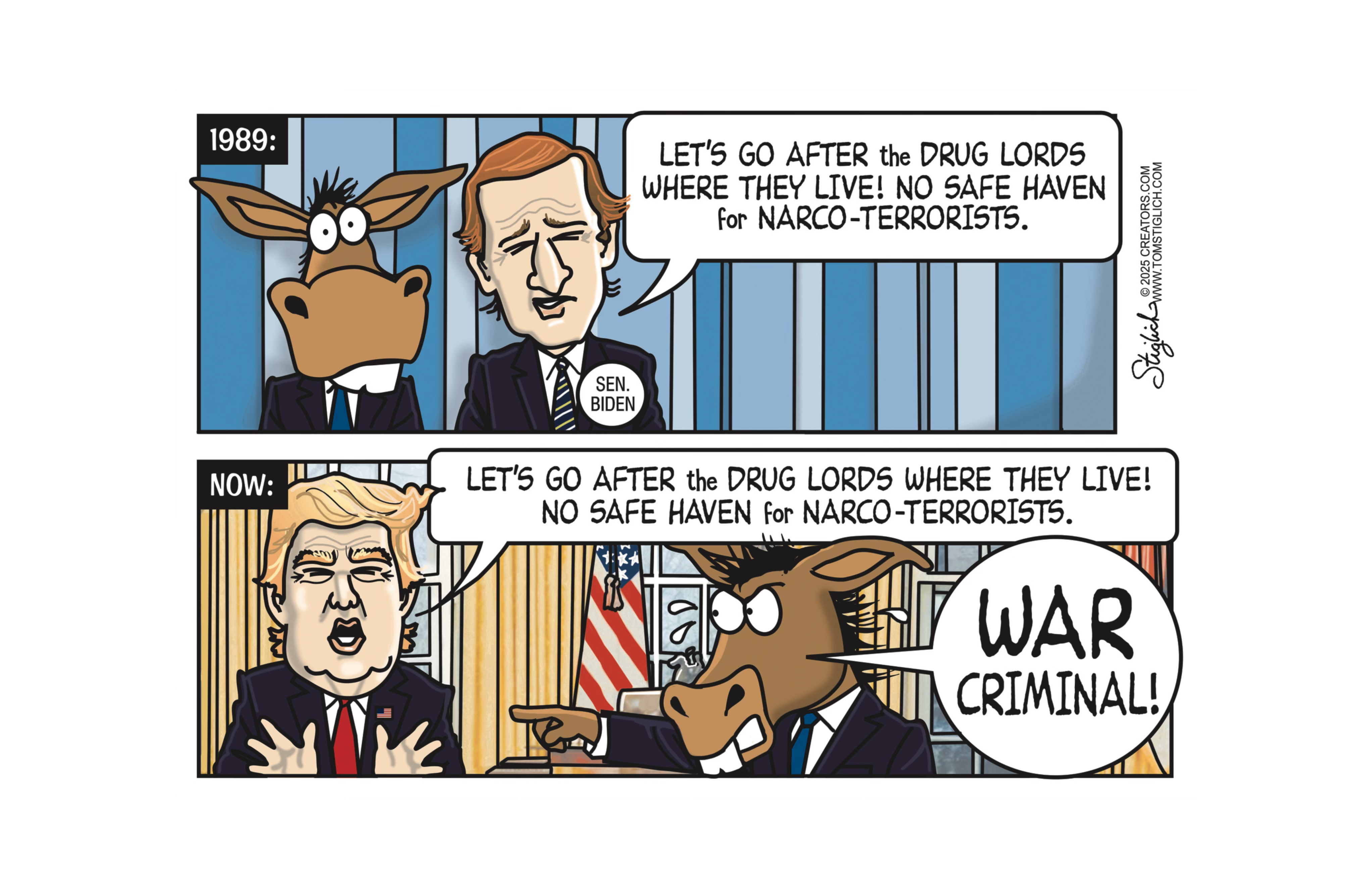
In recent weeks, Secretary of War Pete Hegseth has faced intense criticism for authorizing U.S. forces to interdict and “neutralize” Venezuelan drug-trafficking vessels that are flooding America’s streets with deadly fentanyl and other narcotics. These operations—targeted, proportionate strikes against armed narco-combatants operating go-fast boats and semi-submersibles—are portrayed by some in the media and political opposition as reckless or unlawful overreach.
This criticism is not only misplaced but reveals a glaring partisan double standard. Hegseth’s actions are fully legal under the president’s Article II authorities as Commander in Chief, existing counter-narcotics statutes, and longstanding maritime interdiction protocols.
More importantly, they are necessary.
Fentanyl kills over 100,000 Americans annually, fuels transnational criminal organizations, erodes border security, and constitutes a direct assault on U.S. national sovereignty. Neutralizing a handful of armed drug-running vessels crewed by combatants is a restrained defensive measure to protect American lives.
History shows that presidents of both parties have taken far bolder military actions—often with greater scope, higher civilian risk, and less direct connection to immediate U.S. security—yet faced dramatically different levels of scrutiny depending on their party affiliation.
Consider the Record:
President Ronald Reagan authorized military operations in the 1980s against drug cartels, including support for interdictions that resulted in armed engagements.
President George H.W. Bush ordered the full-scale invasion of Panama in 1989 to apprehend drug kingpin Manuel Noriega—a military operation involving thousands of troops and civilian casualties.
President Bill Clinton launched cruise missile strikes on Sudan and Afghanistan in 1998 and conducted a 78-day bombing campaign in Kosovo in 1999 without explicit congressional authorization.
President Barack Obama dramatically expanded the use of drone strikes and manned airstrikes across multiple theatres (Iraq, Syria, Libya, Yemen, Somalia, Pakistan). In 2016 alone, the U.S. dropped over 26,000 bombs—part of an expansive campaign that continued broad interpretations of the 2001 Authorization for Use of Military Force (AUMF) and resulted in hundreds of reported civilian deaths. These operations often proceeded with limited advance congressional notification or specific approval.
Press Double Standard On Display
While these Democratic administrations faced some criticism, it was generally muted compared to the wall-to-wall condemnation that greets any assertive national security move by Republican presidents—especially those of Donald Trump. Media coverage and congressional oversight during Obama-era operations tended to emphasize strategic context and humanitarian intent, even amid acknowledged civilian casualties. By contrast, similar or lesser actions under Republican leadership are routinely framed as dangerous escalation or abuse of power.
This disparity is not accidental. It reflects a deeper institutional and media bias that views executive action through a sharply partisan lens: restrained when exercised by Democrats, reckless when exercised by Republicans. The current outrage over targeted strikes on drug-trafficking combatants—vessels that are often armed, evasive, and that directly enable the poisoning of American communities—fits this pattern precisely.
America cannot afford selective indignation on national security. The broad and illegal importation of fentanyl is a clear and present danger, exacerbated by weak borders and foreign-based cartels. Secretary Hegseth’s operations represent a responsible, calibrated, response in defense of the American people. Critics who remained silent (or supportive) during far more expansive uses of force under prior administrations should examine their own consistency before questioning measures that save lives and secure our nation.
This is not partisanship—it is pragmatism.
Protecting the homeland demands resolve, not selective outrage.


