


Everywhere Santa Barbara residents turn, the message is the same: pay more.
At the grocery store, it’s bag fees and bottle deposits. At home, it’s water, sewer, trash, parking, and permit fees. Each increase is described as “modest.” “Necessary.” “Unavoidable.”
But taken together, they form something else entirely — a parallel tax system built on fees instead of votes.
Fees, however, don’t fix systems.
They fund them.
The Checkout Line Was the Warning
California once trusted people to reuse. Paper grocery bags were free — and reused again at home, even repurposed to cover schoolbooks and protect textbooks, year after year. Bottles were returned to local stores for cash. No fees at checkout. No bureaucracy. No shortfalls.
That system worked because responsibility was clear.
Then it changed.
Bag Fees and Bottle Deposits
How “Responsibility” Became a Revenue System

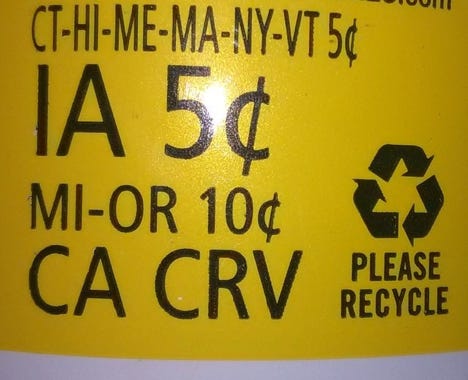

Today, consumers pay:
25¢ per paper bag starting in 2026
5¢ or 10¢ bottle deposits at checkout
We’re told it’s about behavior change. But the bag fee doesn’t go to environmental cleanup. It doesn’t go to recycling programs. It doesn’t go to schools. Retailers keep it — under a state mandate.
Bottle deposits are marketed as “refundable,” but in reality, consumers rarely get the full amount back. Redemption centers pay by weight, not per container. Many centers have closed. Long lines and strict sorting rules turn a “deposit” into a partial reimbursement at best.
Unclaimed deposits don’t disappear. They quietly prop up the system.
What was once a manufacturer responsibility has become consumer-funded compliance.
From grocery bags to water bills, the message is the same: pay more, ask later.
Please don’t forget: your elected officials put a charge on grocery retailers for grocery carts taken off their property which leads to higher cost per item you purchase!
Utilities: Where the Real Money Is
That same fee logic now dominates local government.
In Santa Barbara, water, sewer, and trash rates have climbed sharply — often well above CPI. Each increase is justified in isolation: infrastructure, staffing, compliance, reserves.
But rate studies tell a clearer story. Roughly half of recent water rate increases are tied to operations and maintenance — the category that includes staffing, benefits, pensions, overtime, and administrative overhead. Infrastructure matters, but it isn’t the whole picture.
Once government takes control of a system, it must fund:
The service
The administration
The enforcement
The future pension obligation
Those costs never go down.
And they don’t stop at the city.
County government adds its own layers. The state adds more. Each level raises fees to fund permanent payrolls with guaranteed benefits.
You can’t raise every cost and freeze the one people use to survive them.
So, Who Gets the Money?
That’s the question residents are never encouraged to ask.
Fees and rate increases don’t just pay for pipes, trucks, or programs. They pay for:
Salaries
Overtime
Health benefits
Pensions
Consultants
Compliance staff
Growing administrative layers
At the city, county, and state level, residents fund a large, permanent public workforce whose compensation is protected by formulas and contracts — while households are told to absorb higher bills quietly.
This isn’t accidental. Once a fee exists, it rarely sunsets. Once a bureaucracy exists, it must be funded forever.
Now Apply That Logic to Housing
This is where the contradiction becomes impossible to ignore.
A four-member City Council majority — Meghan Harmon, Wendy Santamaria, Kristen Sneddon, and Oscar Gutierrez — is pushing rent registry, rent stabilization, and in some cases retroactive limits.
Their argument is simple: Rent increases must be capped — often at 60% of CPI — to “protect” tenants from rising costs.
But that standard applies only to housing.
The same council votes to approve:
Utility rate increases above CPI
New and higher fees above CPI
Parking increases above CPI
Permit and regulatory costs above CPI
No 60% cap
No hardship exemption.
No acknowledgment of cumulative impact.
Government raises costs first — then tells housing providers they can’t respond.
Caps for landlords, escalators for government — that’s the real affordability crisis.
A Forgotten Piece of History
There’s another detail missing from this debate — and it matters.
Before 2005, serving on Santa Barbara City Council was never intended to be a professional salaried position.
Councilmembers earned about $800 per month — roughly $9,600 per year. (Now, this is how much each receives just for their car allowance.)
The mayor earned about $1,200 per month — roughly $14,400 per year.
Public service. Not a career path.
That changed when voters approved a charter amendment tying council pay to Area Median Income (AMI):
Councilmembers: 80% of AMI
Mayor: 100% of AMI
Adjusted automatically every year
No annual vote. No debate. The formula runs on autopilot.
Today, councilmembers earn roughly $74,000 per year, with benefits and retirement contributions on top.
At the County Level
Restraint is even looser. In 2025, the Board of Supervisors approved a nearly 50% pay increase, pushing salaries toward $171,000 per year — by vote.
No CPI cap.
No retroactive freeze.
No moral lecture about “affordability.”
The Double Standard
If retroactive rent freezes are fair, why wouldn’t retroactive wage freezes be fair?
If landlords must absorb:
Government-driven utility hikes
State-mandated fees
Rising insurance
Regulatory compliance
Why are government wages and benefits shielded from the same restraint?
Why is cost-shifting labeled “greed” when it comes to privately owned rental housing — but labeled “governance” everywhere else?
This isn’t about opposing tenant protections. It’s about consistency.
The Real Problem That Won’t Go Away
Santa Barbara doesn’t have a landlord problem. It has a government cost problem.
Every fee is defended as “small.”
Every rate hike is framed as “necessary.”
Together, they erode affordability far faster than rent ever could.
If 60% of CPI is the “ethical standard,” then City Hall should live by that standard.
If restraint is good policy, City Hall should be the first to restrain itself.
Community Calendar:
Got a Santa Barbara event for our community calendar? Fenkner@sbcurrent.com
The saying "Do unto others as you would have them do unto you" jumps out. A start would be to exchange the council's car allowance with a bicycle allowance.
Merry Christmas Bonnie! The numbers you lay out don't lie, we are being robbed by the inept leaders that run the city and county.
If our roads were smooth, and public services efficiently run it would be easier to stomach these increases--that is not the case--and why some of my friends talk regularly of leaving.