
Mississippi Bests California in Reading and Math. By a Lot.
When I was a kid back in 1970s California, I learned to spell complicated words like Mississippi. Mrs. Robbins said it slowly. M-I-S-S-I-S-S-I-P-P-I. The second the “double-P” landed, our third-grade class lost it.
“Pee-pee!”
Giggles everywhere. Mrs. Robbins sighed. Unprompted, we spelled it – again and again – to more giggles and laughter on many a bus ride home.
That chant was not just pure phonics. It used rhythm, repetition, and chunking as well. It made a long and an otherwise difficult word stick. In short, it followed the science of learning.
Memory works better with a beat and a pattern.
I guess you can say that back in the day Mississippi taught California children how to spell its name. Maybe there is something even more important it can teach us now?
The Mississippi education system was once – like California today – in a hole. In 2013, Mississippi ranked 49th in fourth-grade reading skills on the National Assessment of Educational Progress. It ranked last in math. Yet, by 2024 it had climbed to ninth in reading. Its average score now sits above the national mark.
When researchers adjust for poverty and demographics, Mississippi ranks first in the country in both fourth-grade reading and math.
First.
In both Reading and Math.
Black students and low-income students in Mississippi outperform their peers in most other states, including California. This happens in one of the poorest states in America.
In contrast, since 2013, California educational outcomes have remained stuck like a stick in the mud. Our state spent those same years raising taxes, not scores.
Proposition 30 and Proposition 55 were sold as temporary fixes for schools. Those taxes brought in more than $120 billion and were largely spent on an ineffective bureaucracy. Reading and math scores flatlined; proficiency stayed low. Enrollment fell by half a million students.
Voters and parents should realize that education results aren’t just about the amount of money spent.
Mississippi spends about $12,300 per student. California spends more than $20,000, 80% more. Mississippi spends far less and gets better early results – and once one accounts for students’ demographics and family income, they shine.
Q. What did Mississippi do that could account for such impressive educational gains?
A. It passed the Literacy-Based Promotion Act.
And stuck with it.
Every child in the early grades is screened several times a year. Kids who fall behind get intensive help right away. Teachers receive coaching in the science of reading. The five core skills—phonemic awareness, phonics, fluency, vocabulary, and comprehension—are taught systematically.
Students who cannot read at grade level by the end of third grade are held back. They are not pushed along in the name of equity. They get daily science-based instruction, not busywork. Schools receive clear A-to-F grades. Growth for the lowest-performing students counts heavily.
No miracle. Just clear goals, early detection, learning based incentives and real consequences. Reading became a skill which had to be mastered before they advanced, not blindly marched through the grades without achieving competency.
Mississippi later extended the same approach into middle school.
Mississippi’s reforms stuck because of the incentives of the adults entrusted to their care.
Too Much Power in Teachers’ Union Hands
The California Teachers Association ranks as the second-strongest teacher union in the country. It claims roughly 300,000 members. It enjoys full collective-bargaining rights, negotiates binding contracts on pay, hours, class size, and evaluations, and has the legal right to strike.
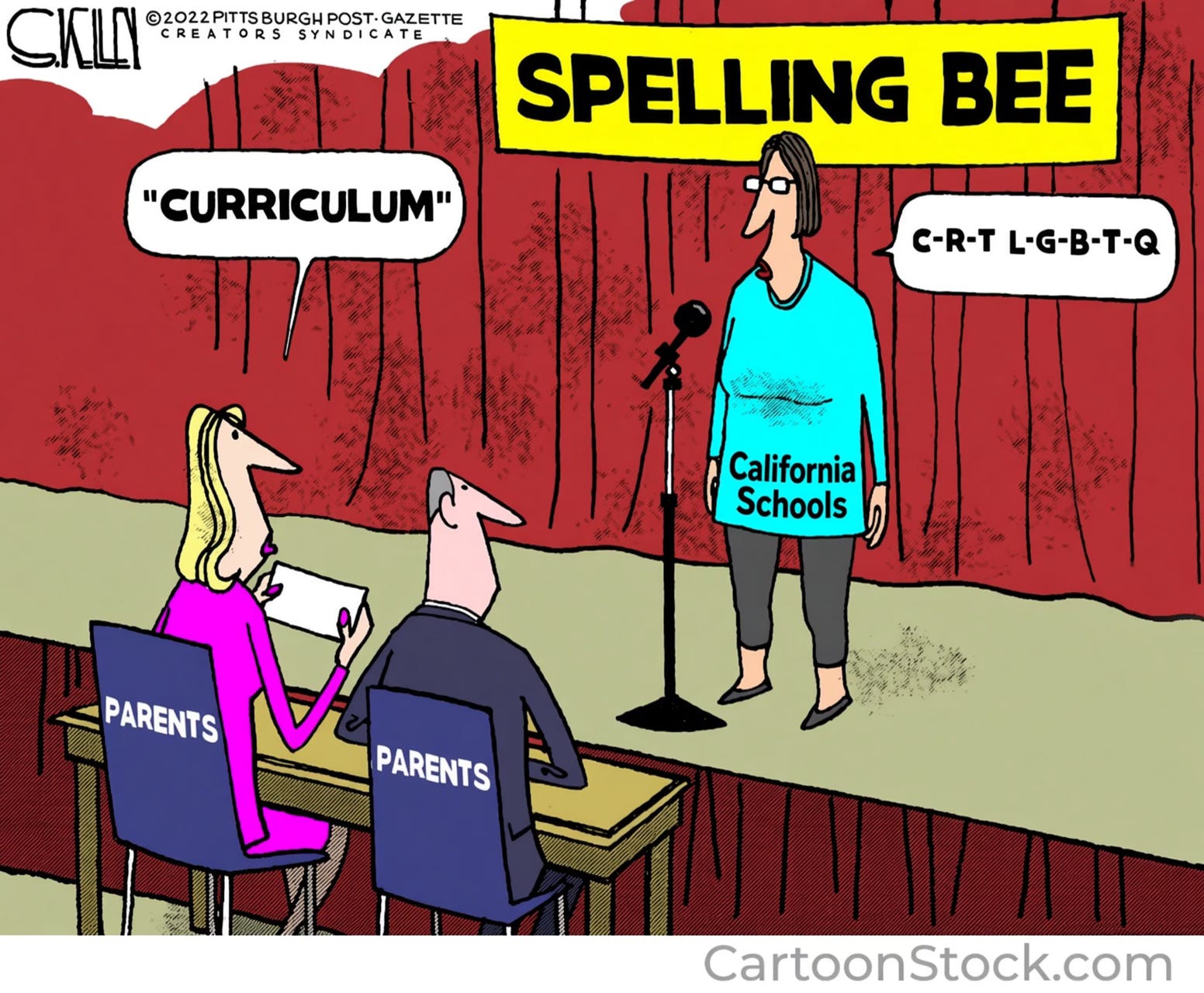
CTA’s political spending and electoral influence are enormous, with a hand in every school board race, and by extension, everything from curriculum to superintendent hires, across the state.
Mississippi’s main teacher group – the Mississippi Association of Educators – has about 8,000 members and ranks near the bottom in strength—47th.
Mississippi is a right-to-work state. Traditional collective bargaining is limited for most teachers. Strikes are illegal. Political influence and resources stay low. Unions are not sitting on both sides of the bargaining table dealing to themselves. In short, teachers’ unions in Mississippi had far less ability to block changes that put student results first.
California has tried pieces of the Mississippi model. It has not adopted the full package or the union-lite incentive structure that ensures that educators focus on outcomes rather than just feathering their nests. Coaching is uneven. Accountability stays soft.
Incidentally, California’s Proposition 3 in this November election would make the higher California tax rates permanent. It asks for more money for schools without requiring better results. Fourteen years of elevated revenue already failed to lift proficiency. Making it a permanent stream will not change that. It will only enlarge the system that has already failed. California needs to stop looking down on Mississippi and start looking at what that state has done right.
Large Gains, Limited Financial Resources
We are not educating kids. We are just pissing away money and, more importantly, pissing away the futures of our children.
Why do so many California educators refuse to follow what works? Mississippi has the highest share of Black residents of any state. Is that the real problem? Could the leadership of the California Teachers Association be so locked into its own financial incentives and power that it rejects proven results from a poorer, Blacker state? Maybe the CTA’s own notorious wokeness is blinded by their paychecks and power?
That old bus chant was never about geography or politics. It was about mastery. A hard word became easy because adults insisted children learn and they gave us methods that worked.
Over the last decade and a half, Mississippi recovered that expectation of competency. California still treats competency as a barrier that is somehow impossible to overcome.
Mississippi showed large gains are possible even under tight budgets and high poverty. California does not need any more taxes. It needs the will to put student learning ahead of the adult’s insatiable financial and political interests. Like the Mississippi Teachers Union, the CTA can have a seat on the bus. But it should not be allowed to drive the school bus over a cliff.
Those children, like myself, who once giggled at “pee-pee” decades ago benefited from an effective California education system in which the outcomes were prized and the bureaucracy constrained.
School kids sitting in California classrooms today deserve the same.
*** Mathew Martin, a Bakersfield native and longtime California resident, is a retired portfolio manager who co-founded and ran Broadreach Growth Fund for 25 years after earlier roles in institutional research and investment management.
Community Calendar:
Got a Santa Barbara event for our community calendar? Fenkner@sbcurrent.com


