

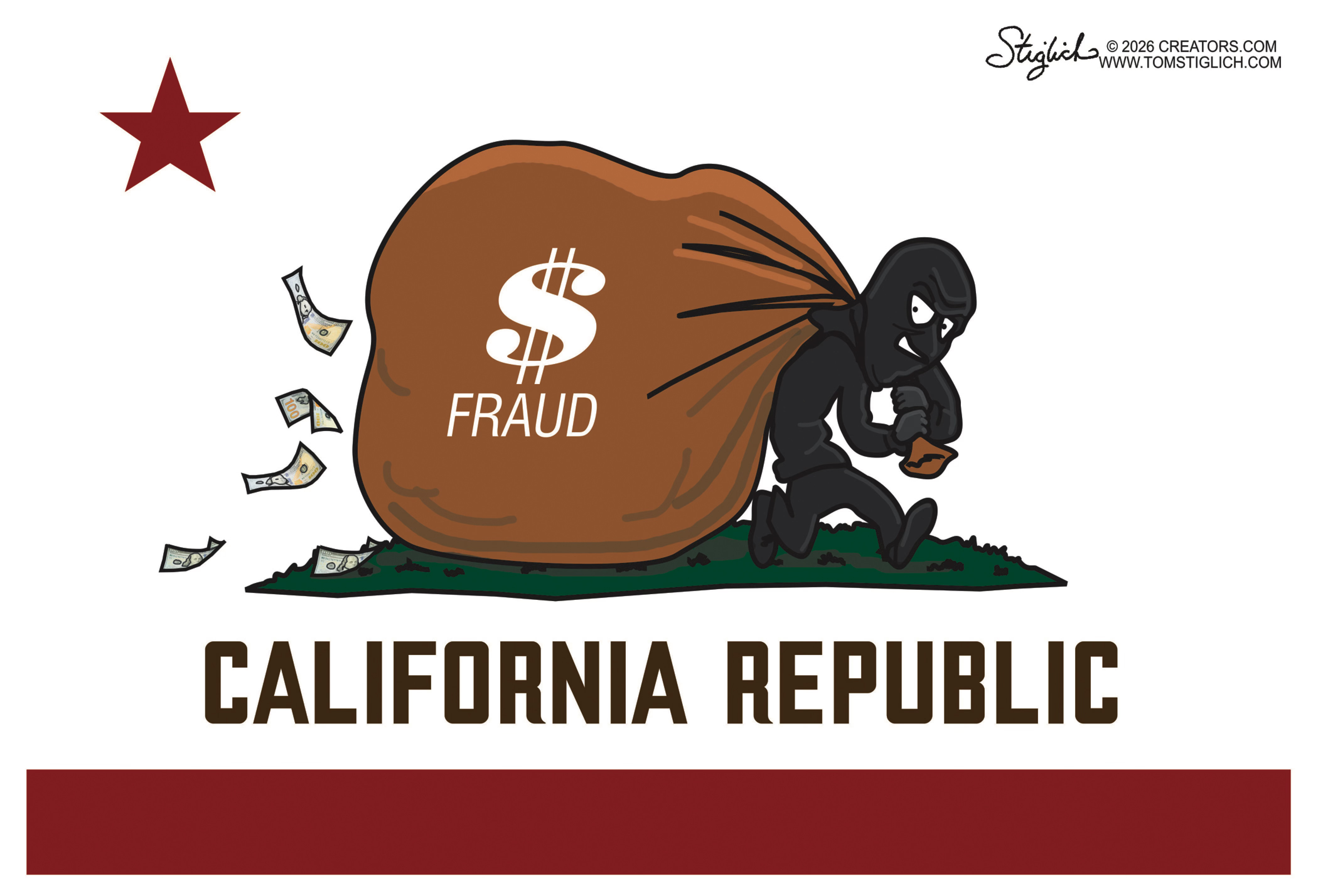
California, once celebrated as a model of prosperity and innovation, now finds itself buried under a mountain of fiscal mismanagement and systemic corruption. The state that routinely boasted budget surpluses in previous years is now facing a multibillion-dollar deficit— a shortfall worsened not just by economic cycles but by persistent waste, outright fraud, and a troubling absence of accountability.
The Golden State’s finances have turned into fool’s gold, and its leadership, from the governor’s office down through bureaucratic agencies, bears direct responsibility.
When California had record surpluses — upwards of tens of billions in the early 2020s — it had a rare opportunity to shore up its pension liabilities, improve infrastructure, and reform healthcare delivery. Instead, those funds were spent as though the good times would never end. Massive social programs expanded with little oversight, and when fraud began to creep in, state agencies often ignored or downplayed it. Now the bill is due, and taxpayers are left footing it.
Fraud and Fiscal Decay
Some of the most egregious abuses have emerged from the social services sector. Hospice care fraud has exploded in California, with investigations revealing hundreds of sham operations billing Medicare and Medicaid for nonexistent patients or unnecessary care. Many of these entities were created solely to siphon public funds, exploiting gaps in oversight that state auditors and regulators failed to close for years.
Meanwhile, several homeless advocacy organizations — intended to be the moral backbone of California’s humanitarian mission — have been caught using taxpayer money for personal or political gain. Reports of executives pocketing relief funds, manipulating contracts, and even violating federal election laws have undermined confidence in both the causes they claim to champion and the politicians who enabled them. The state’s homelessness crisis has only worsened despite billions allocated to “solutions” that too often turned into slush funds.
Fraud is not just a moral collapse — it’s a fiscal one. Tens of billions of taxpayer dollars have been lost to unemployment insurance fraud, pandemic-era relief fraud, and false claims submitted to the state. Yet meaningful prosecutions remain rare. Without accountability, corruption becomes part of the operating procedure — normalized rather than punished.
Conflicts of Interest and Political Favoritism
The wildfire crises that have ravaged California have further compounded the state’s financial collapse. Rather than reforming utility regulation and holding Pacific Gas & Electric (PG&E) accountable for decades of neglected infrastructure, Governor Gavin Newsom’s administration stepped in with a bailout. This intervention, however, came with glaring conflicts of interest: Newsom had previous financial ties and political connections to PG&E board members and donors. Critics point out that a governor negotiating relief for a company whose failures caused significant environmental damage — while Californians pay the price — sets a dangerous precedent.
Fire-related liabilities have also produced an array of liens on state funds and insurance reserves, further straining finances. The cycle of wildfire, bailout, and bureaucratic crisis, continues, while ordinary Californians see higher electricity rates and growing debt.
From Surplus to Deficit — and No One Held Responsible
The shift from surplus to deficit has been breathtaking. After years of windfalls driven by booming tech tax revenues and federal aid, California’s coffers are now emptying rapidly. Declining personal income tax receipts, corporate relocations out of state, and ballooning entitlement spending have combined into what some economists call an inevitable “reckoning.” The underlying problem isn’t just economic—it’s political rot.
State leaders have consistently chosen short-term optics over long-term reform. When scandals surface, committees are formed, and press releases go out—but meaningful reform rarely follows. The state auditor’s reports gather dust, whistleblowers face retaliation, and insiders rotate between agencies and advocacy groups in an incestuous web of influence.
The Moral and Political Failure
California’s governance crisis isn’t limited to numbers on a spreadsheet. It reflects a deeper decay of public trust. The same officials who campaign on transparency govern behind closed doors. The same policymakers who decry inequality quietly allocate public money to their allies and favored networks. Fiscal irresponsibility is sustained by moral hypocrisy—and the people of California deserve better.
The fraud tied to state programs for the vulnerable—the sick, the homeless, the elderly—represents not only theft from taxpayers but also betrayal of those most in need. Every dollar stolen through hospice scams or homelessness “nonprofits” is a dollar kept from those who genuinely require support. Every bailout negotiated under questionable circumstances erodes public confidence further.
Time for a Clean Change
Politicians, like diapers, should be changed often—and for the same reason. California’s leadership class has grown too comfortable, too unaccountable, and too entangled in its own corruption to correct course. The bureaucratic inertia of Sacramento cannot self-police; it requires outside intervention, new leadership, and a public that demands precision, transparency, and results.
Fixing California will not be easy. It means prosecuting fraud, terminating corrupted contracts, and dismantling crony structures that reward loyalty over competence. It means ending the revolving door between advocacy groups and government offices. It means revising ethics and conflict-of-interest laws so that officials cannot enrich themselves or their friends at public expense.
It also means returning to fiscal fundamentals: balancing budgets honestly, investing in durable infrastructure and education rather than throwing money at short-lived programs designed for headlines to signal virtue and not deliver. Accountability and prudence must replace the current cycle of negligence and bailout.
California has always been a place of reinvention. It can be again—but only if voters and honest officials choose to clean house. The state’s budget deficit isn’t just a financial problem; it’s a moral audit of its leadership. And right now, California results stink.
•••
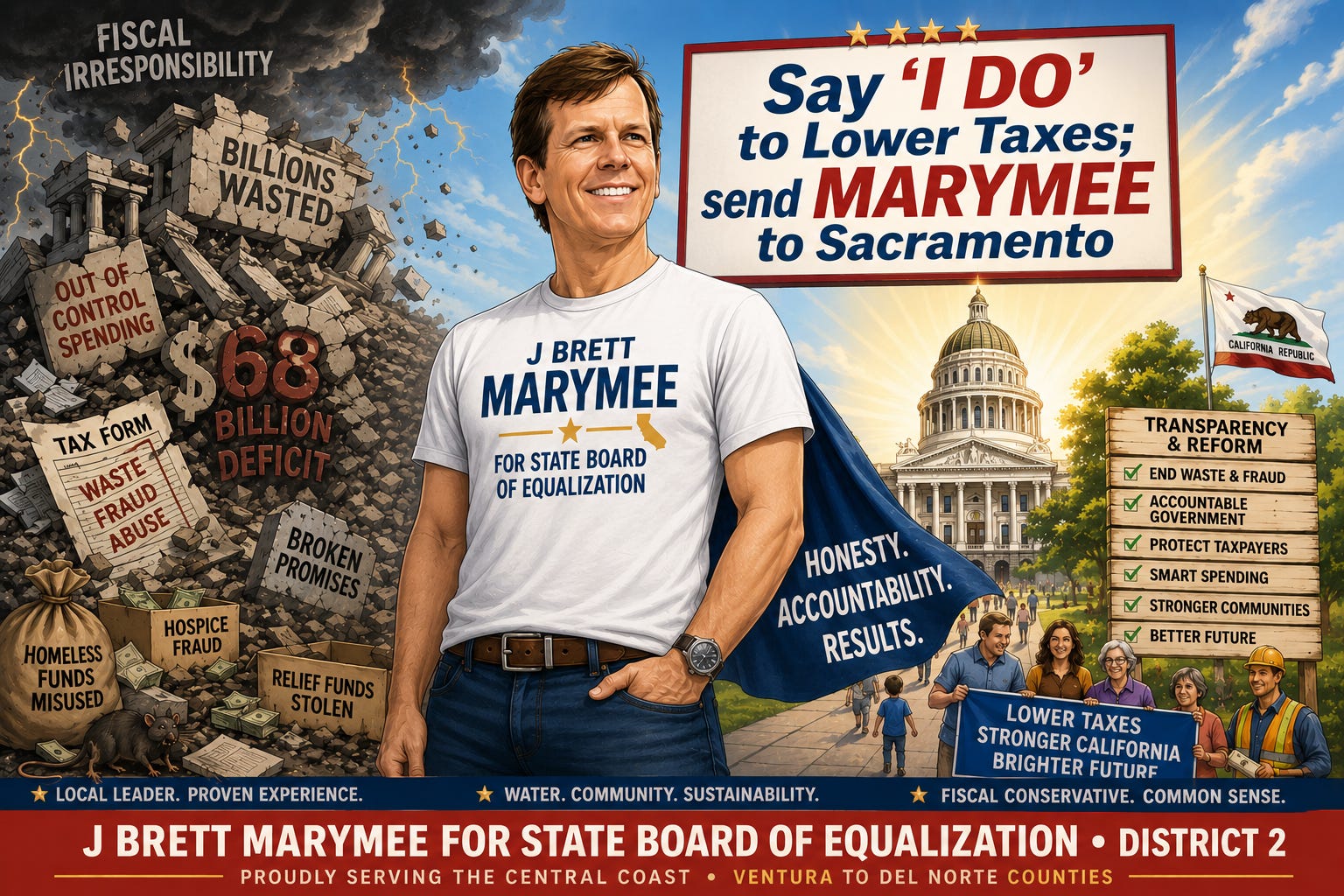
J Brett Marymee is endorsed by Reform CA as a candidate for District 2 State Board of Equalization, which covers 19 counties from Ventura to Del Norte along the California coast. He is on the June 2nd ballot. He is currently elected as a Director for the Santa Ynez River Water Conservation District, the Santa Ynez Community Services District, and appointed to the Eastern Management Area Ground Sustainability Agency.
Community Calendar: