

On March 13, 2026, U.S. Energy Secretary Chris Wright invoked the Defense Production Act to direct Sable Offshore Corporation to resume operations at the Santa Ynez Unit (SYU) and its associated pipeline. The directive seeks to curb California’s reliance on imported crude oil; recent data from the California Energy Commission show foreign sources account for roughly 61 percent of refinery inputs in 2025.
If approvals proceed smoothly, full production could ramp up soon. The move has reignited fierce condemnation in Santa Barbara County, where local media and critics have reacted with alarm. Yet the knee-jerk, emotional outcry overlooks a crucial scentific reality: the Santa Barbara Channel’s natural seafloor seeps release far more oil into the ocean continuously than all the man-made spills combined.
The seeps, concentrated around Coal Oil Point, rank among the world’s most active natural marine hydrocarbon releases. Peer-reviewed studies over decades estimate liquid petroleum outflows at 100 to 175 barrels daily, most consistently 100–150 barrels per day. This equates to 36,500 to 64,000 barrels annually—a relentless, unmanaged flow that deposits tar balls on beaches, fouls seabirds and marine mammals, and vents volatile compounds into the air.
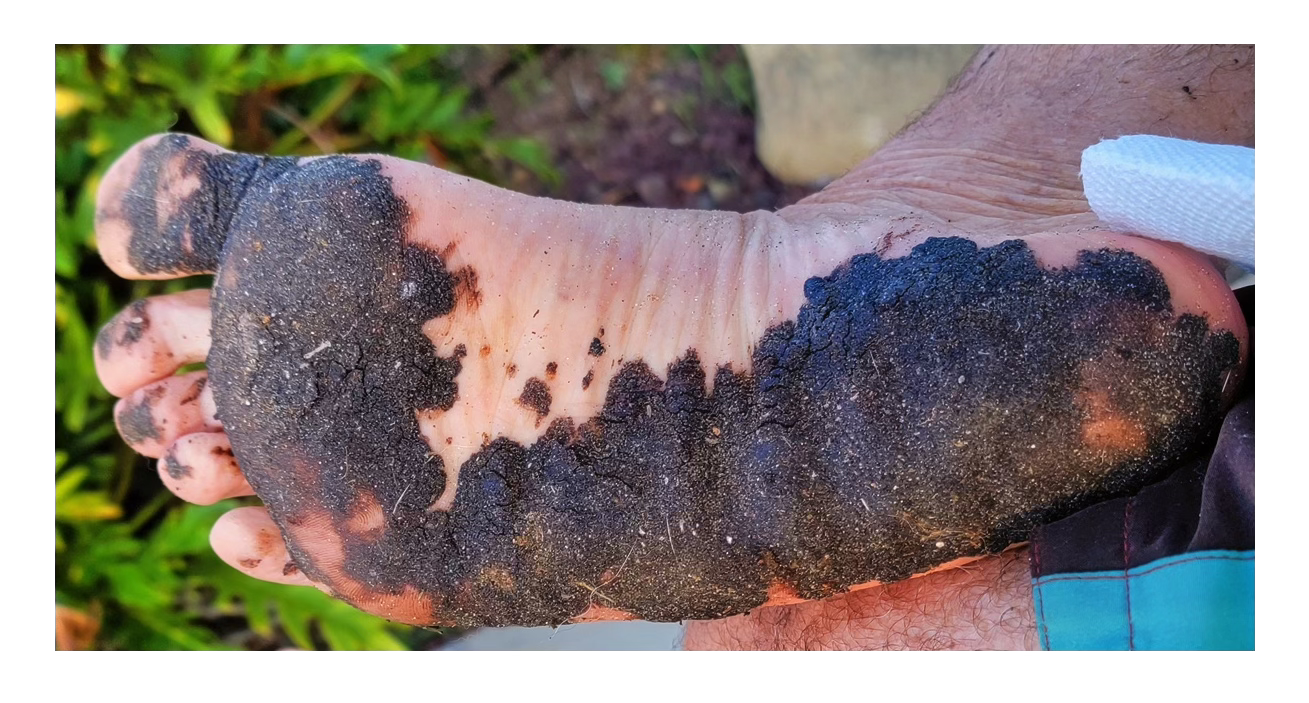
The phenomenon has endured for millennia: it enabled the Chumash to seal their canoes and explains why beachgoers often return home with tar on their feet.
The Region’s Two Largest Spills
The 1969 blowout at Union Oil’s Platform-A unleashed 80,000 to 100,000 barrels over ten months, blackening the coastline, killing thousands of birds and marine mammals, and fouling hundreds of square miles. Televised images of the disaster galvanized the environmental movement, spurring the National Environmental Policy Act (1970), the Environmental Protection Agency’s creation (1970), major Clean Water Act amendments (1972), the California Environmental Quality Act (1970), the California Coastal Commission (via 1972 ballot initiative), stricter offshore drilling rules, and the first Earth Day on April 22, 1970.
The event forged modern environmental oversight.
The 2015 Refugio pipeline rupture released 2,500 to 3,400 barrels total, with about 500 barrels reaching the ocean—the rest contained or recovered onshore.
Both incidents were acute and finite, prompting enhanced safety measures. Natural seeps, by contrast, vastly exceed the Refugio ocean entry annually, year after year, with no quick fix except reservoir depletion via production.
Since 1969, natural seepage in the Santa Barbara Channel (with Coal Oil Point as a primary source) has introduced an estimated two to four million barrels of oil into the environment—roughly 20 to 50 times the 1969 spill’s volume, and hundreds to thousands of times the Refugio ocean spill. This chronic burden dwarfs the one-time impacts of those events.
Regulated Extraction is a Net Positive
Production depressurizes reservoirs that drives hydrocarbons through seafloor fractures.
At nearby Platform Holly in the South Ellwood Field, operations reduced seep area extent and emission volume by more than 50 percent over 22 years. Targeted wells achieved complete cessation in monitored zones within weeks.
“Within three weeks of turning on this new well, seepage into the tents completely ceased,” wrote James R. Boles, emeritus professor of Earth Science at the University of California, Santa Barbara, in a 2023 study published in Marine and Petroleum Geology.
Regulated extraction thus captures hydrocarbons that would otherwise escape unchecked, transforming a diffuse, perpetual pollutant, into a controlled resource governed by modern safeguards: real-time monitoring, corrosion-resistant infrastructure, and improved response protocols refined since 2015.
The longer Sable and others operate safely, the greater the environmental benefit. Sustained production could drive progressive reductions in seepage—potentially nearing cessation in connected areas, as seen at Holly—yielding cumulative gains for local marine health.
Imagine cleaner beaches, free of tar and fresher sea breezes.
Why, then, the persistent litigation from state agencies and nonprofits?
Efforts to block Sable by organizations such as the Community Environmental Council and Center for Biological Diversity perpetuate unchecked leakage rather than reduce it. These groups have drifted from the environmental movement’s original focus on safe, practical stewardship to an uncompromising push for net-zero emissions, prioritizing carbon metrics over site-specific solutions like seepage reduction.
Even former net-zero proponent Bill Gates has pivoted away, stating in late 2025 that aggressive emissions timelines are unrealistic, climate change won’t end civilization, and the focus should shift toward improving human lives through innovation rather than emissions alone.
Of course, restarting operations carries risks and unforeseen events. Potential spill intensity does matter. Yet modern safety standards—far advanced since past spills—combined with proven seepage reductions, meaningfully offset those risks by lowering the channel’s overall chronic hydrocarbon burden.
Economically, the stakes are clear for Santa Barbara County. Sable supports jobs onshore and offshore, with full operations poised to add hundreds more while injecting substantial spending into wages, supplies, and services. At full production, expect Sable to contribute millions of dollars a year directly to the county budget.
The Channel’s enduring hydrocarbon load stems not from managed platforms but from pressure beneath the seafloor. Restarting regulated production at Santa Ynez offers a pragmatic path to mitigate that chronic seepage while generating tangible economic gains.
If local environmental advocates and officials truly prioritize cleaner air and water, they would back the restart rather than work so hard to obstruct it. Draining the reservoirs remains the most effective—and financially prudent—way to reduce natural’s massive and perpetual oil spill.

Community Calendar:



Got a Santa Barbara event for our community calendar? Fenkner@sbcurrent.com
James, thank you for the impactful, factual, objective, and unemotional article. Having lived through the SB oil spill, being a UCSB student in 1969, I witnessed the emotional and irrational reaction to the admittedly damaging accident. However, as James points out, the size of the spill was about the same as the annual seepage from the ocean floor. One could say that SB and others are suffering from ODS, oil derangement syndrome, i.e. if something involves oil, I need to be against it, facts and reason be damned. Berney
Thanks James for for pointing out something that needed to be said. I find it interesting that environmentalist, which we all are to some extent, never seem to be concerned about the pollution of the ships that carry the oil to California after it is drilled in another country with fewer pollution controls than the U.S.