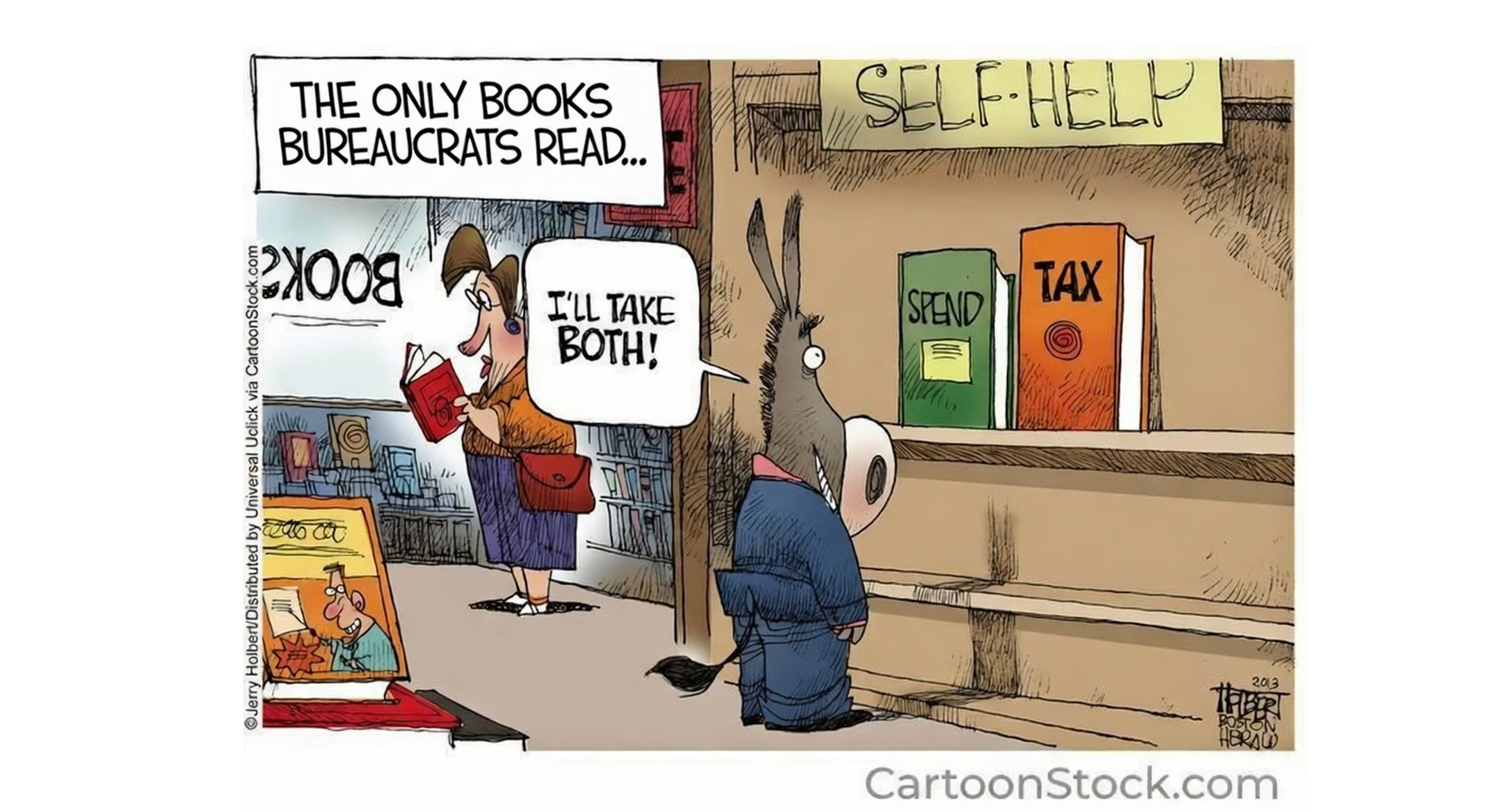
Santa Barbara, like much of California, is in a self inflicted budget crisis — and the response by our leaders has been to look for more ways to take money from taxpayers rather than address the real causes of the deficits in our city, county, and state budgets.
Our City’s own Finance Director, Keith DeMartini and his team, have been straight with the Council and staff: the General Fund is structurally out of balance because revenues aren’t growing fast enough to keep up with expenses, especially labor costs.
In the FY 2026 budget adopted last year, total revenues of about $243 million were projected against expenditures of about $244.5 million, creating a $1.6 million operating deficit — and that deficit grows in future years if nothing changes. In fact, the twoyear forecast already anticipated using $1.6 million and $5.9 million in reserves in FY 2026 and FY 2027 just to balance the budget. Growth in sales tax and hotel tax revenues has slowed, while employee costs and pensions continue to outpace revenue growth. Without new revenue or cuts, the City’s reserves will be exhausted within a few years. (docs.santabarbaraca.gov)
This isn’t some obscure projection — this is DeMartini and his team’s warning to the Council that the city’s finances are under serious stress, a message they’ve delivered clearly in multiple reports.
Wages, Unions, and the Real Cost Pressures
One of the biggest contributors to higher expenditures is union-negotiated wage increases and benefits that exceed the assumptions built into the City’s budget. Public safety bargaining units — police, fire, and managers — have secured raises of 5 % or more, and these costs are funded entirely by the City’s General Fund. The City has committed to long-term financial obligations for employee pensions, health benefits, and retirement plans, and these are growing at unsustainable rates. Transparent California 2024 salaries for State of California | Transparent California
Specific Drivers of Future Deficits
The City’s own forecasts show that employee costs, pensions, and healthcare, are the primary drivers of these rising deficits:
Pension Contributions: The City’s pension obligations to CalPERS (California Public Employees Retirement System) are increasing year over year, particularly as the City’s workforce ages and the pension funds face shortfalls in investment returns. The total annual pension cost will continue to grow by millions of dollars each year, with the City forced to make larger contributions just to maintain current levels of pension funding.
Healthcare Costs: Employee health benefits and retiree health care costs continue to rise. These costs are unsustainable, especially in the face of stagnant revenue growth.
Labor Costs: Unions, especially firefighters and police, have successfully negotiated annual wage increases of 5-6%, creating a significant gap between projected revenue and actual expenses. These increased wages come with corresponding increases in pension liabilities and benefit obligations, further straining the City’s budget.
A Hidden Driver of Financial Strain
Part of the problem deeper than salaries is the erosion of the property tax base, a key revenue source for local government. In Santa Barbara, nonprofit organizations and the Santa Barbara Housing Authority (SBHA) have purchased significant amounts of real estate — much of it formerly taxable — and now own it tax-exempt.
While we often think of nonprofits as focused solely on affordable housing, many of these organizations are buying office buildings, commercial properties, and other types of real estate, which they convert into tax-free property. The welfare exemption allows nonprofits to avoid property taxes, whether the property is used for housing or for office space, museums, education, or other charitable endeavors, meaning the tax base is further eroded.
Instead of contributing to the General Fund, these properties remain off the tax rolls, forcing the remaining taxable properties to shoulder an increasingly larger portion of the cost for city services.
This ongoing shrinkage of the taxable base has a compounding effect on budgets when combined with rising costs for labor, pensions, and essential services. The City and County must balance the benefits of nonprofit property ownership with the reality that tax-exempt properties do not help fund the services that the public relies on.
More Low-Cost Housing on Tax-Exempt Land
The City’s Enhanced Infrastructure Financing District (EIFD) proposal could become a significant tax burden shift for Santa Barbara residents. The idea is to use EIFD financing to fund low-cost housing development, relying on future property tax revenue to cover infrastructure costs. But there’s a key flaw in this approach: much of the land developed for affordable housing is already tax-exempt, thanks to nonprofit ownership and the Santa Barbara Housing Authority’s land acquisitions.
By expanding housing projects on land that is tax-exempt, we are essentially creating more housing on land that generates no property tax revenue for the General Fund. This means more housing without any corresponding property tax revenue to fund the public services that these new developments will require.
This expansion of tax-exempt land further drains the City’s revenue stream at a time when it is already facing structural deficits. By creating more affordable housing on non-taxable land, the City is essentially cutting off a critical source of future property tax revenue — money that could help fund fire departments, police departments, libraries, parks, and other essential services.
Increasing tax-exempt properties limits the ability of the General Fund to receive the revenues it needs to maintain the basic functions of our city government, thereby shifting the burden onto residents and businesses who are still paying property taxes.
A History of Tax Increases
The City has already asked residents to approve taxes twice in recent years: Measure C (a 1% sales tax increase) and Measure I (a ½% sales tax increase). However, what happened to the funds raised by these measures? Rather than focusing on the infrastructure needs they were originally intended to address, a significant portion of those funds was **diverted into the Affordable Housing Fund, which supports various housing projects but doesn’t generate direct tax revenue.
At the same time, nonprofits received city funds for distribution. While these initiatives may have merit in some cases, they represent a diversion of taxpayer funds away from the original purpose of addressing infrastructure and public service needs.
Use Contracting — Like We Did With the Golf Course
There are better options. Years ago, the City successfully converted the golf course to contract operations, saving taxpayer dollars while keeping the service. Why aren’t we exploring similar transitions for other services? Contracting out noncore or nonpublic safety functions could reduce payroll costs and longterm benefit obligations without harming essential services.
It’s worth noting that our water, sewer, and trash bills already go to Los Angeles, as these functions are contracted out to outside companies. If you get a ticket in Santa Barbara, you’re sending your payment out of town as well. Why isn’t the City looking at more opportunities to reduce operating costs by contracting out other services — or at least exploring private sector options for things like street maintenance and parking enforcement? We’ve seen before that contracting can lower costs and improve efficiency.
At a time when our budget is on shaky ground, we need leaders willing to ask tough questions:
Why are we paying more for the same services?
How much do labor costs and pensions consume?
Should we preserve tax-exempt status for properties that once paid into our community?
A Missed Opportunity: BCycle’s Free Ride
Santa Barbara’s BCycle electric bike share program has been in operation for about three years, and in that time, riders have clocked over 2 million miles across the city. If the City charged just $1 per mile ridden, that would have generated $2 million in revenue — money that could go directly into the General Fund to help maintain public infrastructure like streets and bike lanes.
Instead, the City has given private companies like BCycle a free ride on public streets and sidewalks, without a dime coming back to help support the infrastructure they rely on.
This missed revenue could go a long way in helping the City close its growing budget deficit. And no consultant needed for that $2 million idea!
Four Council Members Want Even More Money
And now, after all this — deficits, union wage pressures, and tax revenue erosion — four Council members (Sneddon, Santamaria, Gutierrez, and Harmon) are pushing a rental registry proposal estimated to cost the City at least $6 million per year. At a time when our finances are stretched thin, is creating a costly new program really the solution? Or should we be tightening our belts, cutting waste, and reforming policies that put unnecessary pressure on working families while exempt institutions and special interests avoid paying their fair share?
A Message to City Employees and Unions: Help Us Save Money
The time has come for everyone — especially our city employees and unions — to take a hard look at how we can all work together to protect our essential services. The City is facing severe budgetary constraints, and the status quo is no longer sustainable.
If wage increases and new benefits continue to outpace revenue growth, we will face the difficult decision of having to lay off workers or reduce essential city services.
A Call for Fiscal Responsibility
It’s time for a return to fiscal discipline. Instead of constantly searching for new ways to tax residents and businesses, our leaders — from City Hall to Sacramento — must confront the spending side of the budget. We owe it to taxpayers to prioritize smart reforms, curb unchecked cost growth, and ensure that every dollar collected is spent responsibly. The future of our community depends on it.
This just in from a reader…..
Hi Bonnie, Is there any competent, confident, and qualified candidate ready to challenge Laura Capps in Santa Barbara County Supervisorial District 2 (covering the Mesa area, Isla Vista, eastern Goleta Valley, parts of the City of Goleta, and portions of Santa Barbara city) in the upcoming June 2026 primary?
Or will this tax-and-spend Progressive incumbent coast back into her $174,000/year seat without a serious primary opponent? Filing closes Friday, March 6th.
Share ideas in the comments or DM me directly.
Community Calendar:
Got a Santa Barbara event for our community calendar? Fenkner@sbcurrent.com


Our electoral system rewards unions using their dues to elect their negotiating partners. The incentives are reversed from the private sector where efficiency, productivity and reduction of head count is the goal. In the public sector, the more employees, the more dues, the more political influence is generated. Thus the opposite of efficiency and productivity. The answer is to change the electoral system. It's a waste of time to merely complain or try to change this politician or that politician. Change the system. www.hearthepeople.org.
Stellar reporting Bonnie, while continuing to sound the alarm about the ticking, looming, financial time bomb that threatens our standard of living. It’s the same old song and dance; spend more than the city takes in, continue to raise sales, TOT, weed and property taxes with no corresponding reduction in spending.
I’m really sorry to be pessimistic, but the only way out of the financial mess that liberal, Democratic Socialists have left us is for the city to declare bankruptcy! Nothing else ever seems to change. The Unions continue to fleece taxpayers, and clearly have an allegiance to their membership and not the citizens they serve.
Then, (as the grift goes) when conservatives start shouting for reforms, the left pulls the same old time tested reaction of playing the fascist, race card shouting down any chances of positive dialogue or change.
Really sad state of affairs with the same lefty playbook remaining in tact; Deny, Deflect, Deceive and Defame.