

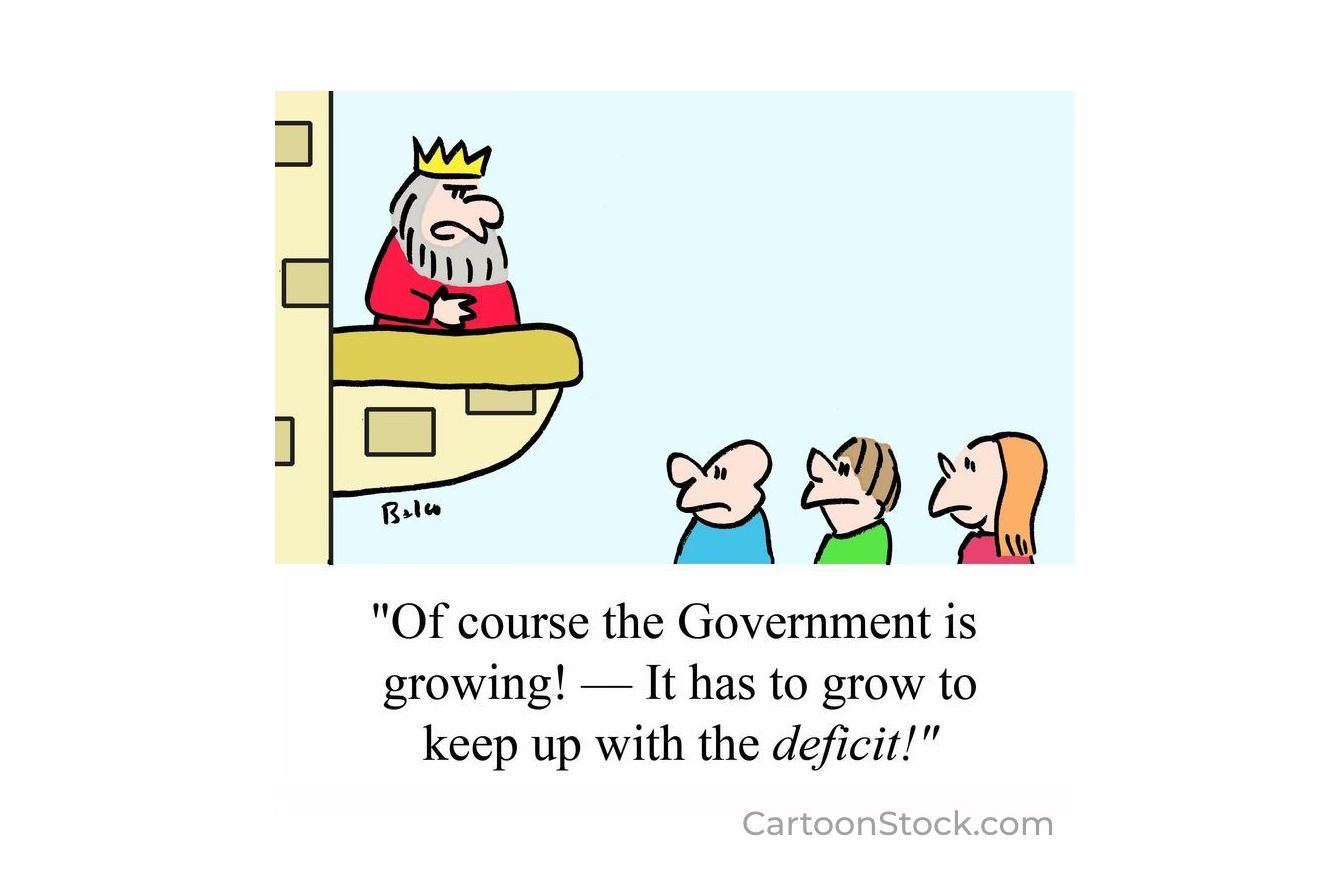
As City Hall pushes new demands on developers and residents, leadership inertia leaves downtown underutilized while taxpayers foot the bill.
If you didn’t watch Tuesday’s City Council meeting, it’s worth your time. Yes, it was long. But the discussion after the Paseo Nuevo item revealed something far more concerning than a struggling mall: it showed how deeply City Hall is relying on endless tax increases—not fiscal discipline—to solve its growing budget problems.
How We Got Here
Years ago, the city required the previous Paseo Nuevo leaseholder to invest roughly $20 million in major upgrades just to be considered for a lease extension. No guarantee. No commitment. Just spend the money first and hope for approval later.
The leaseholder complied. They invested the money, began construction, and did exactly what was requested. Yet the extension never came. Ultimately, the leaseholder walked away, and AB Financial, holder of the original lease loan, inherited the property.
Paseo Nuevo, in many ways, has gone fallow — just like State Street. “Fallow” is a farming term: land left unplanted so it can rest, rebuild nutrients, and eventually be productive. Fallow land isn’t dead—it’s unused potential waiting for the right steward, vision, and timing. Right now, both State Street and Paseo Nuevo are our urban fallow fields: under-utilized, under-imagined, and producing far less than a thriving city center should. They are empty not by fate, but by leadership inertia. Without a plan, bureaucratic drift decides the future.
Despite this history, some council members act as if the private sector can absorb endless uncertainty. This is reflected in the guiding financial philosophy at City Hall, where budget gaps are routinely handled by floating new tax proposals instead of reviewing spending.
Even after Measure C and Measure I failed to stabilize city finances, more revenue proposals are almost certainly forthcoming.
The History of Paseo Nuevo
The City has subsidized this private development from day one. The City’s Redevelopment Agency subsidized construction of the Paseo Nuevo Shopping Center by paying for land assembly and constructing City Lots 2 and 10:
• $18 million land value at time of acquisition
• $7.8 million additional for parking and land acquisition obligations
• $2 million loan at 10% interest for parking structure cost overruns
The original developer sold the ground lease shortly after opening at loss compared to the mall development cost and the City has never received rent payments for the ground lease because the mall never met performance targets.
Around 2019, the then owner of Paseo Nuevo came to the City with a redevelopment plan after Macy’s left the mall. Alliance Bernstein (AB) provided a loan to the former mall owner to make this redevelopment happen. Unfortunately, the redevelopment plan required a ground lease amendment that the City ultimately rejected because of the desire to build housing on the site. The former mall owner was then unable to make payments on the loan provided by AB. This resulted in a default and eventual foreclosure with AB taking over the ground lease, putting the City in the position it is today.
The Affordable Housing Shell Game
State, county, and city rules require 10% low-income housing in new developments. AB Financial agreed. Their initial offer exceeded this: 80 units on Lot 2. I had concerns about the height, but the offer was generous and practical.
Then AB asked a reasonable question: If we build more affordable units now, can we receive credit toward future projects?
The city said no.
AB scaled back to the legal minimum: 24 low-income units (10% of 233). They also offered a flexible plan: build the 24 units now on Lot 2, and, if another nearby property became available, move them to a dedicated building later. They even suggested a smaller 48–60-unit version if the city helped identify a suitable site.
The council’s response?
Outrage:
AB would be “evicting” tenants, taking away amenities, or “segregating” residents. Yet where is the will for these families to pursue the American dream—working hard, building equity, and owning a home—if flexible, lawful solutions are treated as a problem rather than an opportunity?
Political Theater Instead of Governance
Amid the housing debate, Councilmember Oscar Gutiérrez suggested giving Paseo Nuevo “back to the Chumash.” He then asked if they could legally build a large casino on the site.
The answer: yes.
A serious issue tossed out casually, as if he were spitballing on social media instead of weighing the use of a major public asset.
But here’s the truth: it’s always easy to be generous with someone else’s property.
If Oscar genuinely believes the City of Santa Barbara sits on stolen land, he should lead by example, starting with giving back the properties his own family owns—including the one he currently rents a room in. Show the community what this looks like in practice before volunteering hundreds of millions of dollars in public land on a whim.
Public trust grows when policymakers hold themselves to the same expectations they impose on others.
Escalating Demands: Now 25% Affordable Housing
Now the council doesn’t just want the legally required 10% affordable housing—they want 25% or more for this project. Why? Why not? When the money isn’t theirs, increasing demands is effortless.
Then came Rob Fredricks from the Housing Authority, offering his financial “input.” Rob was upset that AB would build the low-income units themselves instead of transferring them to the Housing Authority. A reminder: every dollar the Housing Authority uses comes from us, the taxpayers. And of course, Rob had a price ready for our next round of contributions to compensate the Housing Authority for being locked out of this opportunity: $125,000 per affordable unit—roughly $7 million total.
This is on top of the millions already handed over for Housing Authority projects across town—funding we will never get back.
Always go after the money source. And in Santa Barbara, the money source is always us, the taxpayers.
The City’s Revenue Playbook
At the end of the meeting, the city quietly released a list of roughly 200 “revenue ideas”—a polite term for new taxes, fees, assessments, surcharges, and penalties. Every option is considered, except the one that matters most: reducing spending.
The council met only once in November—to hire a new city attorney—mostly behind closed doors. Fewer meetings, rising deficits, and growing pressure on residents to fill the gaps. Measures B, C, and I were sold as essential fixes. They weren’t. And more increases are coming.
A Pattern That Can No Longer Be Ignored
Santa Barbara has entered a predictable cycle:
– The city demands more.
– The public pays more.
– Developers reconsider or walk away.
– Projects stall.
– Budgets deteriorate.
– Responsibility is deflected.
Parking and circulation issues, long raised by residents, only become urgent when development momentum is threatened. And the “give land for housing” strategy mirrors decades of Housing Authority practice.
Where We Go From Here
Santa Barbara deserves leadership focused on the mundane but terribly important things—business vitality, streets, sewers, public safety—that are fundamental for a thriving city. That focus should be matched with a coherent, long-term policy view, and a transparent financial plan.
Instead, residents are treated as nothing more than a revenue source, while staff patches together the next financial solution to the real-world problems City Council was meant to address, but chooses to ignore, because our enlightened Council members are too busy dealing with climate change and indigenous rights.
We can do better.
We must do better
And What About AB Financial?
Given the escalating demands and unpredictability coming from City Hall, AB Financial might consider an alternative path: a vibrant retail and entertainment hub. A Picadilly Square 2.0 in the former Macy’s building could re-energize downtown, stimulate business activity, and restore community vibrancy without endless policy detours and political theatrics.
Sometimes the most practical solution is the one that reconnects us to what once worked.
Just in from a reader….
Will the Iconic 150-Year-Old Mesa Tree Be Axed?
The City of Santa Barbara plans to remove 56 mature trees—including the majestic 150-year-old Italian stone pine known as “the Mesa Tree”—for the $131 million Vic Trace Reservoir replacement.
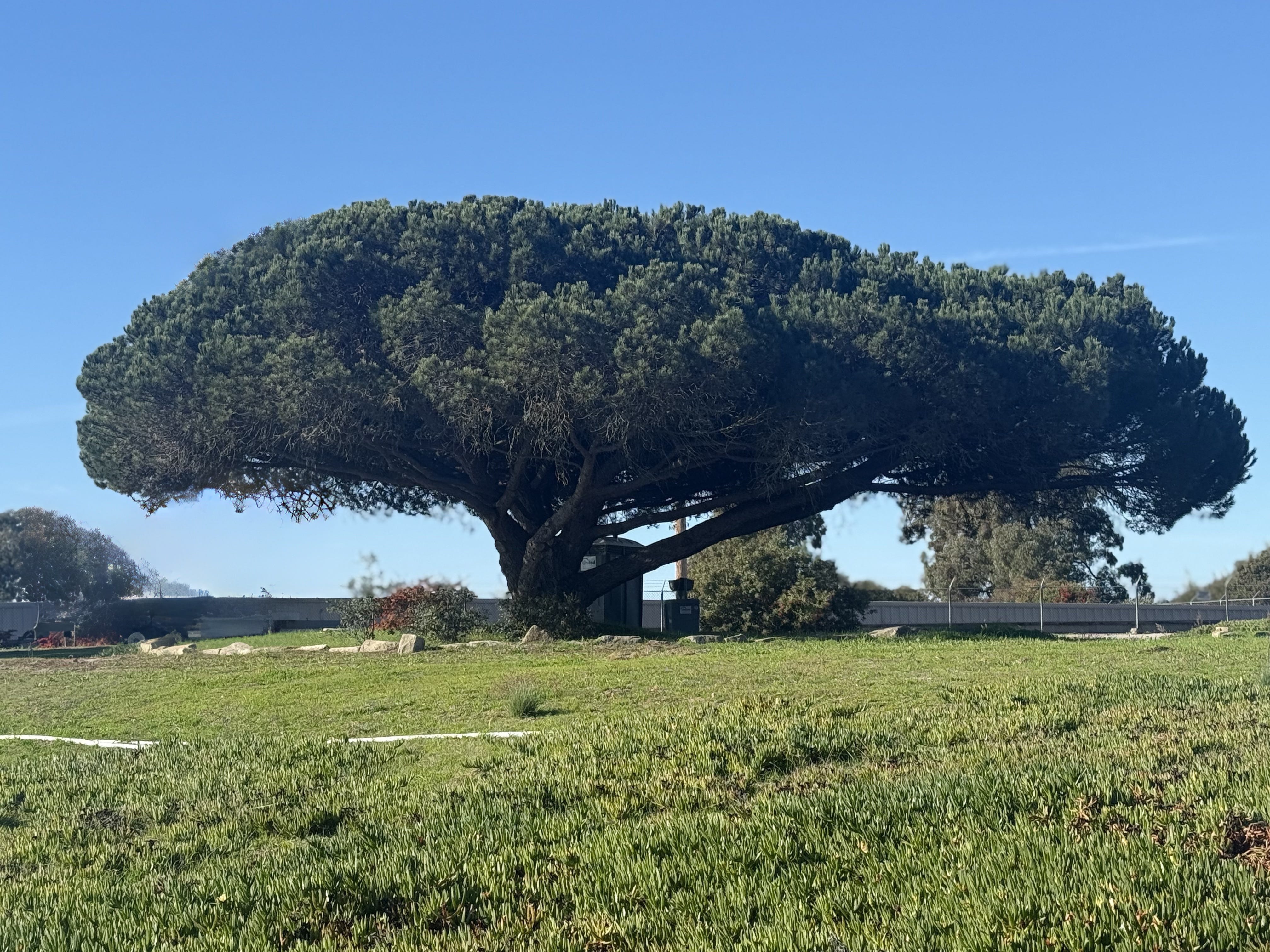
Fun fact: nearly every one of these trees was perfectly fine when the original and larger surface area reservoir was built around them in 1956. Apparently, over the last 70 years they’ve wandered into the wrong place all by themselves.
City staff insist that tweaking the still-unfinished reservoir design is simply too much trouble. Curious—when homeowners even dare trim a city tree in their own setback, an army of city arborists descends. Yet to save 56 mature trees including a 150-year-old landmark located on city land? Crickets.
On December 4, the few neighbors who heard that the axe is poised to come down on these trees pleaded with the Street Tree Advisory Committee to spare many of the 56 trees, which provide sanctuary for hawks and owls that naturally control rodents and are critical to the local ecosystem. The committee’s recommendation is not yet public.
The final, decisive public hearing on all the tree’s fate is Wednesday, December 17, 2025, 4:00 p.m. (City Hall, 735 Anacapa Street, Santa Barbara, CA). These trees cannot speak for themselves—only you can. Attend if possible or email parks@SantaBarbaraCA.gov
Happy Friday! And we hope to see you at the Miss B’s Children’s Holiday Party on Saturday (more info below)!

Community Calendar:



Got a Santa Barbara event for our community calendar? Fenkner@sbcurrent.com
Keep the trees, get rid of the politicians.
Sounds like Santa Barbara could use some oil revenue.