
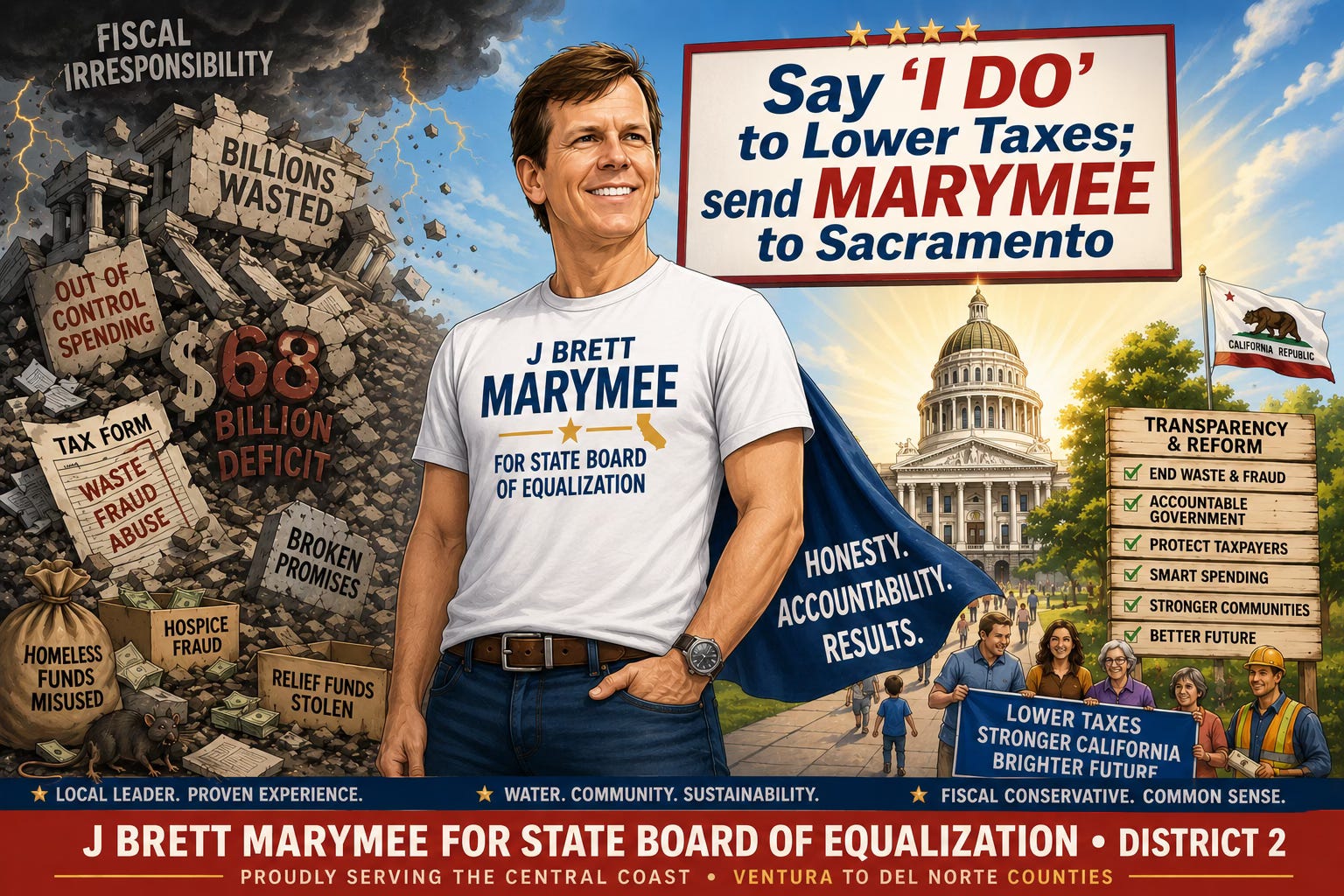
California’s property tax system, anchored by Proposition 13, has long been considered a safeguard against runaway taxation. By capping the base property tax rate at 1% of assessed value, it created predictability for homeowners and businesses alike. Yet today, even that limit deserves reconsideration—not upward, as some have argued, but downward. Reducing the rate to three-quarters of a percent or even one-half percent would impose needed discipline on government while empowering residents and revitalizing the state’s economy.
The core issue is not merely the rate itself, but what has happened to government spending over time. California’s state and local budgets have expanded dramatically, supported in part by steady and substantial property tax revenue streams. While public investment is essential for infrastructure, education, and safety, the growth of spending has increasingly flowed into areas that lack transparency and measurable outcomes. Billions are directed to non-governmental organizations and nonprofit entities whose effectiveness is often difficult to evaluate. Taxpayers are left to wonder whether their contributions are truly improving communities or simply sustaining bureaucratic ecosystems.
Nowhere is this concern more visible than in major urban centers such as Los Angeles. Despite massive expenditures aimed at addressing homelessness, public safety, and urban blight, many neighborhoods continue to struggle with crime, vagrant encampments, and deteriorating public spaces. Residents see firsthand the disconnect between funding levels and real-world results. Parks that should be safe for families are avoided, and public confidence in government stewardship is gone.
Accelerate Reform by Lowering Property Tax Rate
Advocates of maintaining or increasing current tax levels argue that more funding is the solution. However, decades of rising expenditures suggest otherwise. Without structural incentives to prioritize efficiency, additional revenue can enable complacency rather than reform. Reducing the property tax rate would reverse this dynamic and requires a CA referendum to enact it. By limiting the resources available, it would compel state and local governments to focus on core responsibilities—public safety, infrastructure, and essential services—while reevaluating programs that fail to deliver measurable value and end them.
This approach is grounded in a simple principle: scarcity drives prioritization. When government must operate within tighter fiscal constraints, it is forced to make difficult but necessary decisions. Wasteful spending, redundant programs, and ineffective initiatives are more likely to be scrutinized and eliminated. In contrast, an ever-expanding revenue base reduces the urgency for such accountability.
Lowering property taxes would also have a direct and positive impact on California residents. Homeownership remains one of the most significant financial commitments for individuals and families. Even modest reductions in property tax rates can translate into meaningful savings, increasing disposable income and improving financial stability. For small businesses, reduced tax burdens can free up capital for hiring, expansion, and innovation—key drivers of economic growth.
Slowing the California Outmigration Movement
Moreover, California continues to face a well-documented outmigration trend, with residents and businesses relocating to states perceived as more affordable and business friendly. High overall tax burdens are frequently cited as a contributing factor. By reducing property taxes, residents will send the state a powerful signal to commit to competitiveness and economic vitality. Retaining residents and attracting new investment would ultimately strengthen the tax base in a more sustainable way than relying on higher rates applied to a shrinking population.
Critics may contend that lowering property taxes would jeopardize funding for essential services. However, this assumes that current spending levels are both necessary and efficient. Californians question this assumption. Efforts to audit and reform government spending—sometimes described as a “Department of Government Efficiency” approach—seek to identify waste, fraud, and abuse within existing budgets. Supporters of reform, like Spencer Pratt, argue that significant savings can be achieved without compromising core services, simply by improving oversight and accountability.
The broader goal is not austerity for its own sake, but smarter governance. Taxpayers deserve confidence that their money is being used effectively, not diverted into programs that prioritize advocacy over results. Reducing the property tax rate is one way to restore that confidence by aligning government incentives with public expectations and the author has a state ballot initiative drafted that will do this.
California has long been known as the Golden State—a place of opportunity, innovation, and prosperity. Reclaiming that identity requires a willingness to rethink entrenched systems and challenge assumptions about taxation and spending. A lower property tax rate would not solve every problem, but it would represent a meaningful step toward fiscal responsibility, economic renewal, and greater accountability.
•••
Author and June 2 candidate J Brett Marymee is running for District 2 Board of Equalization and values your vote. He is endorsed by Reform California and the Howard Jarvis Taxpayers Association. He seeks to serve on California’s top tax board to bring common-sense tax burden relief to all California residents.
Paid Advertisement:
Community Calendar:
Got a Santa Barbara event for our community calendar? Fenkner@sbcurrent.com


I am reminded of balloons twisted to make sculptures of dogs or other facsimiles...the volume in the balloon is just manipulated into a different shape. And in the case of CA's governance, while twisting the balloon into shape, add some additional volume to the balloon...presuming all along that its rubber will have unlimited capacity to infinitely expand. An admirable set of thoughts, especially if we had government leaders, legislators, local elected representatives, etc., who had any sense of fiscal responsibility or accountability. Regrettably, we do not.
California, besides being the brunt of jokes has become a house of cards, teetering on the verge of collapse from its own weight, based on unsustainable grift and fraud.
How about starting with a property tax deduction for seniors and veterans, while disabled veterans pay NO property taxes similar to that of Texas?
Throw in a “Homestead” deduction while you’re at it.
https://comptroller.texas.gov/taxes/property-tax/exemptions/