
As we prepare to celebrate St. Patrick’s Day this year, a few reminders not only about this patron saint of Ireland, but about his impact on saving Western Civilization from the barbaric (literally) ravages of mainland Europe, pre-Medieval period. St. Patrick not only brought Christianity to Ireland, he also set the stage for literacy and learning.
Let’s start with a brief history of the saint, himself. Patrick was born in the 4th c. A.D. into a family of nobility in Somerset, Britain during a time of great uncertainty for the Roman Empire. Roman legions protecting civilized Britain from barbaric invaders were called away to defend other regions of the vast Roman Empire. Britain was then left vulnerable to attacks.
Just before his 16th birthday, Patrick, on holiday in Cornwall, was kidnapped by Irish pirates from the nearby beach. Patrick was soon sold as a slave to a Druid tribal chieftain, and promptly made to shepherd his flocks. Like most teens, up until his capture, Patrick’s training in the traditions of the Christian faith largely remained dormant and superficial. All that changed, however, as he was no longer living a comfortable life within his family domain. In his Confessions, Patrick writes, “...[as I tended the flocks]...I would pray all the time, day after day, and as I did so...more and more [in every kind of weather] I would notice no discomfort, and I was never slack, but always full of energy. It was clear to me now that this was due to ... the Spirit within me.”
Six years after his capture, at age 22, in a dream, Patrick was told that he would be given an opportunity to escape by sea back to his homeland. When indeed this chance did arise, Patrick readily and willingly obliged. It took him a full two years to finally arrive back home and to the joyful embrace of his parents. As he settled back into life in Britain, he began his studies for the priesthood, becoming not only a priest, but a bishop. However, another dream beckoned Patrick to return to Ireland.
The rest is familiar -- how Holy St. Patrick began his ministry, which led to the Christian conversion of the entire island of Ireland -- all within his own lifetime.
But what about the connection with St. Patrick that led to the preservation and safekeeping of Western Civilization as we know it?
Any travels through Ireland, especially in the west, one encounters the iconic tall towers which were built to provide beacons of safety for the many monasteries dotting the countryside. These monasteries served as havens of protection and education for the surrounding population, not just for the monks and scribes who lived, studied, and worked there.
In a time when books in our own libraries today are disappearing off shelves in high schools all over the country, we can better appreciate how these Irish monks and scholars saved the great books of Western Civilization. While libraries and learning were being systematically destroyed all over mainland Europe, manuscripts of Greek and Latin writers, from Plato to Plutarch, Augustine to Aquinas, were carefully copied [by hand] and preserved.
The high towers of these monasteries kept the books safe from Viking raids over the centuries. This tiny emerald isle served as an isolated safe haven to preserve the chronicles of Western Civilization – kept by the labors of these holy monks – from the notice of mainland Europe. It serves as a lesson for the benefits of sometimes keeping a low profile, flying under the radar, so to speak. A good example of how these monasteries operated, as well as a demonstration of the inspired and dedicated making of these manuscripts, can be found in The Secret of Kells – a rich animated film to watch, not just for children (it won the Academy Award for best animated film, when it was released in 2009).
An Irish Pub Crawl Beckons
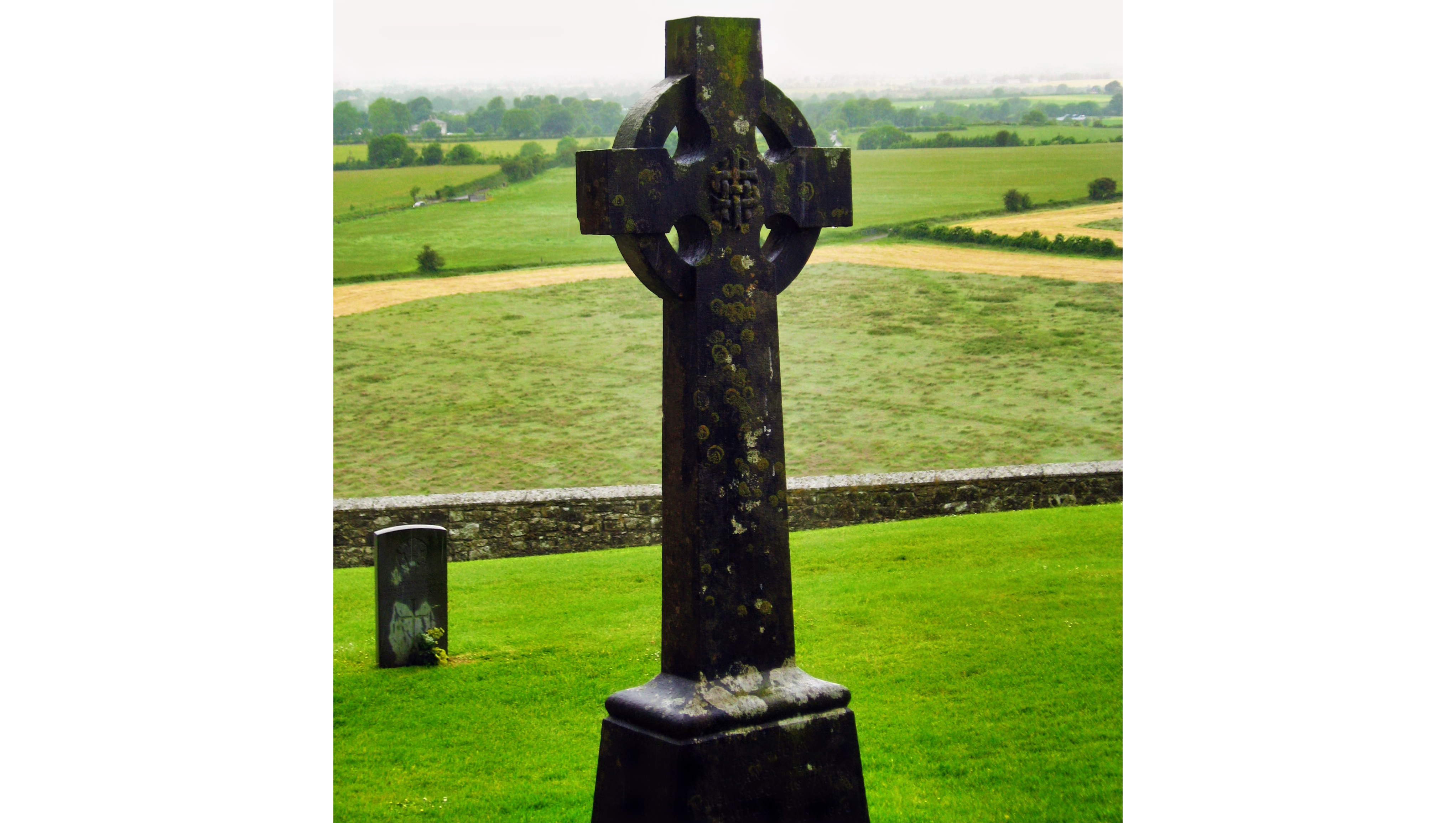
Any visitor to Ireland will be treated firsthand to the full and unique blend of Celtic lore with Christianity. The Celtic crosses incorporate the symbols of the Trinity which existed in Celtic form long before St. Patrick’s time. Hence the shamrock – as the noted symbol of the Irish, with its natural nod to the Trinity – (also not lost on St. Patrick) to blend these two complimentary cultures.
One may visit the ancient monasteries where docents will demonstrate the painstaking process of making the parchment from sheepskins, see the various botanicals that went into making the various inks, and learn how the monks spent hours not only copying the manuscripts, but illuminating them with lush Celtic and Christian designs. Of course the best examples of these manuscripts can be found at Trinity College in Dublin – the Book of Kells. Go online and see for yourself how beautiful, deep , and complex.
During any cultural interlude into all things Irish, mixing history with the vibrant pub culture from Dublin to Galway, and every town and village in between, a wise visitor to Ireland will also take advantage of the art of the pub crawl, for sure. The traditional music is alive and well in most of the local pubs, from Flannagan’s to O’Connell’s in Galway, to the various pubs of Temple Bar in Dublin – and not playing just for the benefit of tourists. In fact, at each pub along the way, one soon learns to pace oneself, perhaps starting with a Jameson on the rocks, and sipping half pints of Guinness from then on. It’s certainly not the same as bar hopping here. Each pub presents its own ambiance, history, and clientele, while the musicians will find even the tiniest corners to assemble at the very least a three- or four-piece band.
So, my hope for everyone reading this column would be to visit your favorite pub on March 17th, (mine happens to be Dargan’s, downtown) and celebrate the richness of this wonderful holiday. As you raise your glass of Jameson or Guinness, toast the Patron Saint himself, with a renewed respect for the impact that one holy and dedicated man can make, not just on a tiny island, but on an entire civilization.
For more information, and for a fascinating read, check out the book by Thomas Cahill, How the Irish Saved Civilization.
Community Calendar:
Got a Santa Barbara event for our community calendar? Fenkner@sbcurrent.com


