
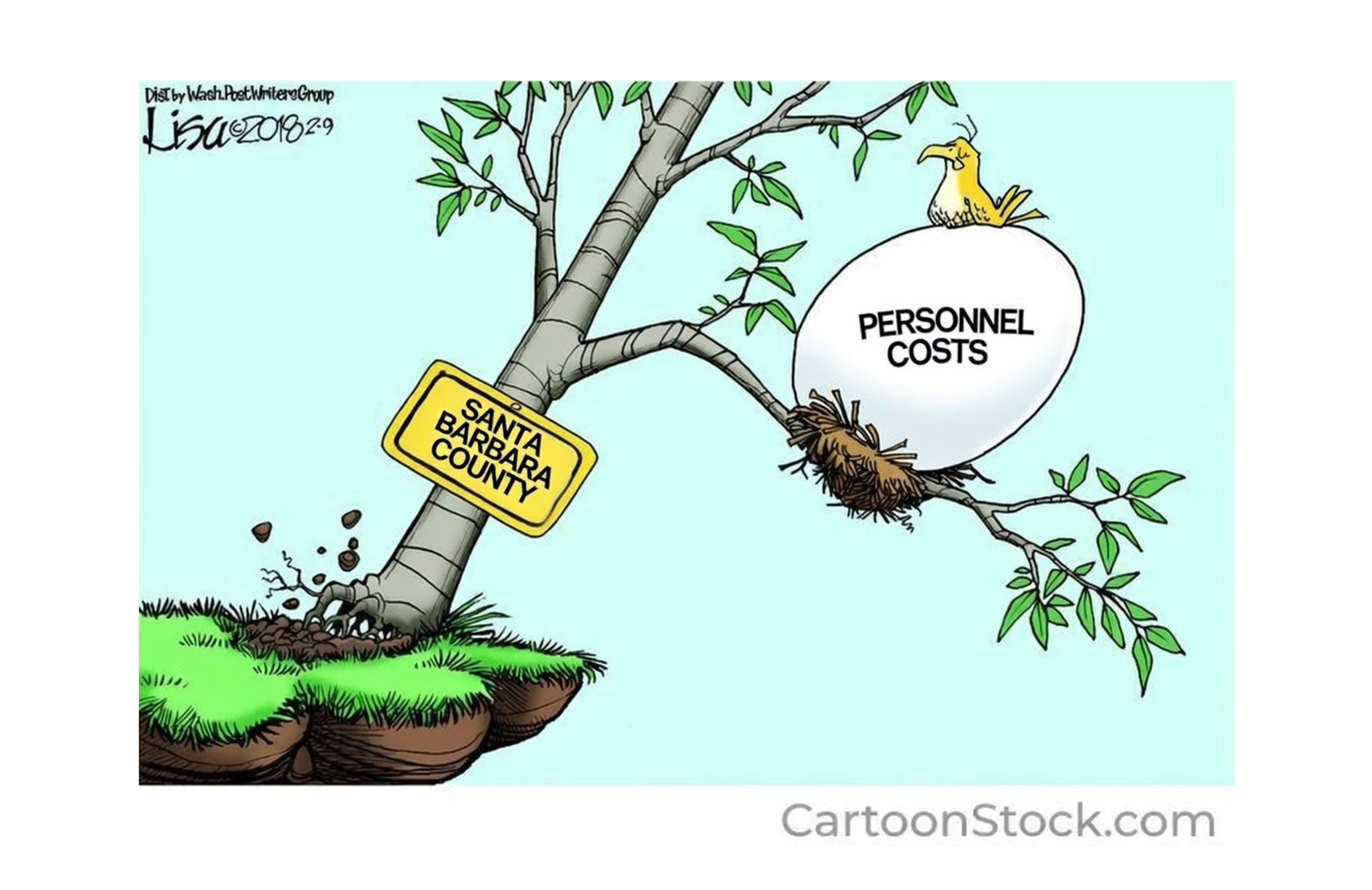
Santa Barbara County is at a crossroads, and once again, local officials are looking to the pockets of poor and middle-class residents to solve a crisis of their own making. The proposal to hike the local sales tax from 7.75% to 8.75% is not just a minor adjustment; it is a profound betrayal of taxpayers, justified by a fiscal narrative that simply does not hold up under scrutiny.
To understand why this tax hike must be rejected, one must look at the math that the Board of Supervisors would likely prefer you ignore.
A Disconnect in Growth
Between the year 2000 and today, Santa Barbara County’s population grew from 399,347 to 441,000—a modest and manageable increase of 10.43%. In a world of responsible governance, one might expect the budget to grow at a similar pace, perhaps slightly higher to account for inflation.
Instead, the county budget has exploded. In 2000, the county operated on approximately $475 million.
Today, that figure has ballooned to a staggering $1.69 billion.
That is a 355.69% increase in spending to serve a population that grew by only 10%. While the number of residents needing services remained relatively stable, the cost of the bureaucracy serving them grew by a factor of nearly four.
The Personnel Pivot
Where is all this money going? The answer lies in the county’s own ledgers: personnel costs. It is an axiom of local government that “people are our greatest asset,” but in Santa Barbara, they have become the greatest expense—growing at a rate that far outstrips the reality – and the ability – of many if not most of the taxpayers who fund them.
Since the 2022–2023 fiscal year, the average cost per county employee has surged by 18%. During that same window, the Consumer Price Index (CPI)—the standard measure for the cost of living—increased by approximately 10%.
When government pay and benefits grow at nearly double the rate of the inflation felt by the private sector, a dangerous gap is created. The plumber, the teacher, and the small business owner are being asked to pay more in taxes to fund raises for government employees that exceed the very inflation the rest of us are struggling with.
The Cruelty of Regressive Taxation
Perhaps most egregious is the method chosen for this “revenue enhancement.” Sales tax is fundamentally the most regressive form of taxation. It does not matter whether you are a multi-millionaire in Montecito or a farmworker in Santa Maria; you pay the same extra cent on every dollar spent.
For those living paycheck to paycheck, unable even to save for a proverbial “rainy day,” that 1% difference is felt at the grocery store, the hardware shop, and the department store. It is a tax on existence that disproportionately drains the disposable income of the poor and middle class—the very people already hit hardest by Santa Barbara’s astronomical housing costs.
To ask the most vulnerable members of our community to subsidize a $1.69 billion bureaucracy is not just bad policy; it is a moral failure.
Demand Accountability, Not More Taxes
The data is clear: Santa Barbara County does not have a revenue problem. It has received a massive windfall of taxpayer dollars over the last two decades. What it lacks is the fiscal discipline to align its spending with its population growth and the economic reality of its constituents.
If the county cannot manage a $1.69 billion budget to serve 441,000 people without reaching for another percent of our sales, the solution isn’t more money—it’s a different approach to management.
We must tell the Board of Supervisors that the “Bank of the Taxpayer” is closed.
It is time for the county to live within its means, just as the residents of Santa Barbara are forced to do every single day.
*****
Big shout-out to longtime SB Current commentator, Earl Brown, hitting 91 years young today! Happy Birthday, Earl!!
*****
Community Calendar:
Got a Santa Barbara event for our community calendar? Fenkner@sbcurrent.com


Fraud. Plain and simple. DOGE THEM!
Oh, come on now… who could be against a 13% increase in sales tax? 😉We know government is best positioned to spend your money. Especially when more than half goes to salaries which have short and long term costs tied to them: benefits, vacations, colas, retirement benefits…. Never ending!