
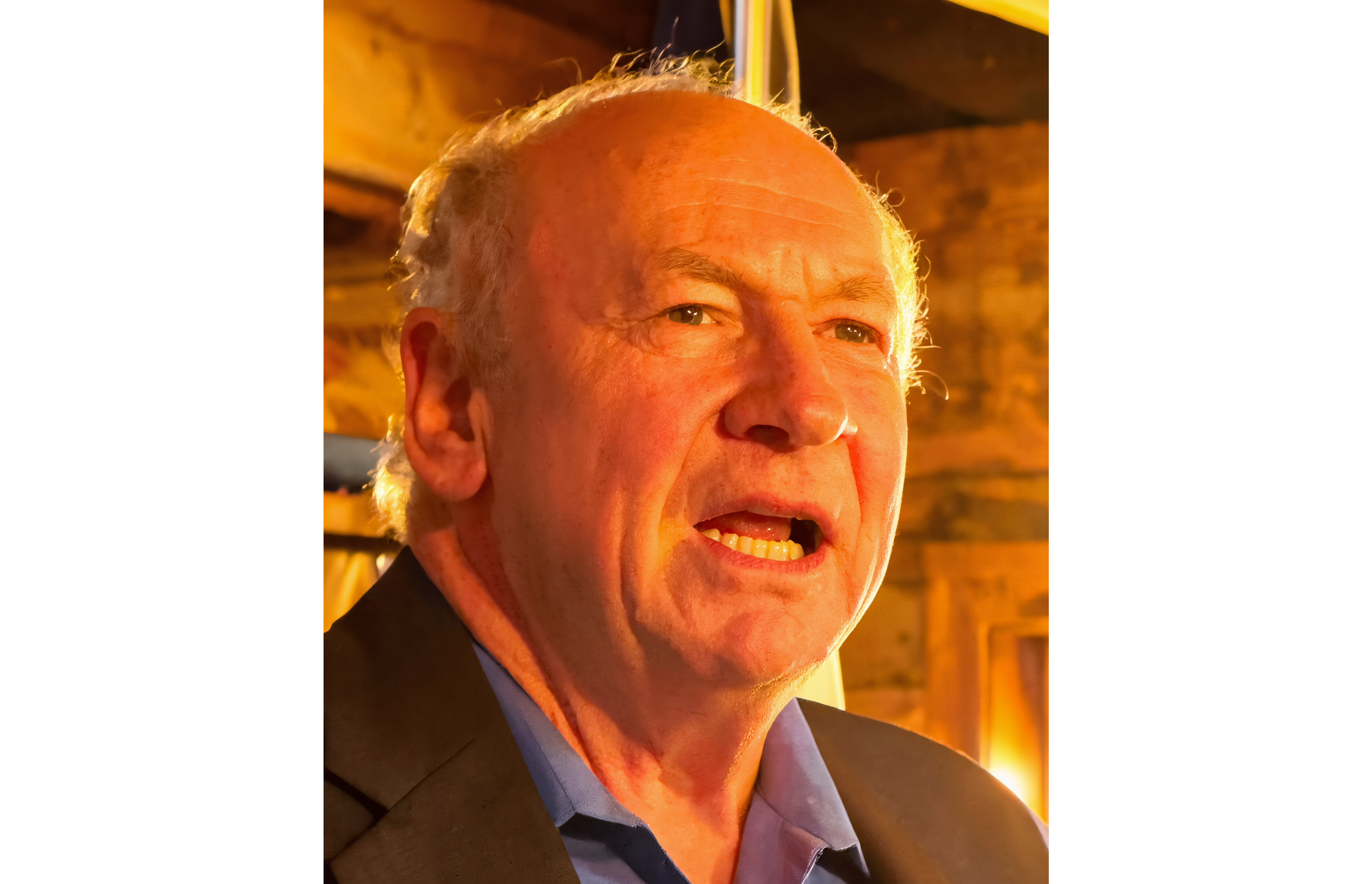
Lee Ohanian Proposes a Free-Market California Comeback
At a packed Timbers Road House on June 6, where Conservative Republicans of Santa Barbara County gathered amid an uncommon air of optimism, UCLA economics professor and Hoover Institution senior fellow Lee Ohanian delivered a pointed and energetic address. A UCSB alumnus with an extensive record advising the Federal Reserve, central banks and political campaigns, Ohanian avoids the familiar litany of California’s woes. Instead, he offers a data-driven, history-infused call to action: the state’s long decline is not inevitable; it’s reversible, provided leaders find the resolve to abandon failed policies in favor of proven, market-oriented solutions.
Ohanian, blending scholarly rigor with quick wit, had the crowd hooked from his opening remarks. In an era of Sacramento’s regulatory overreach, fiscal folly, and one-party hubris, his message sliced through the hall: the Golden State’s problems — from population hemorrhage to housing gridlock are policy choices, not foregone conclusions. And he arrived armed with history, hard numbers, and a practical roadmap that left attendees, including local Congressional candidate Bob Smith, energized for the battle ahead.
A Little Historical Context
”California grew like gangbusters between 1940 and 1970,” Ohanian recounts. “Its population tripled from about seven million. Pat Brown, the Democratic governor, knew what to do. He embraced growth.” Ohanian then paints a vivid picture of that postwar golden age: highways snaking across the landscape, hospitals and universities rising, opportunity blooming for waves of dreamers.
Today’s Sacramento? Permitting delays that stretch into decades, lawsuits weaponized as roadblocks, and red tape thick enough to strangle even the hardiest projects.
The audience ate it up with knowing nods.
On the state’s bleeding population, Ohanian pulls no punches. “California has experienced a massive net domestic out-migration,” he says, detailing how hundreds of thousands of residents and businesses have bolted for lower-tax, lower-regulation havens like Texas, Nevada, and Florida. “We face roughly this level of outflow every year recently,” he notes, driving home the brutal human and economic toll: families priced out of the market they once helped build, companies relocating headquarters, and a shrinking tax base.
High housing prices, underperforming schools, visible homelessness, and unreliable energy aren’t random misfortunes — they are engineered features of prolonged one-party dominance. Ohanian hammers this unsustainability with characteristic punch. “The top 1% are carrying this budget on their backs. How much longer can that last before the golden goose flies away for good?” California’s tax regime, he argues, punishes success, while the regulatory bloat operates “like a whole federal government on steroids” — suffocating innovation and accelerating the exodus.
Practical Environmentalism
Housing – that perennial third-rail crisis, earned a full-throated defense of supply-side sanity. “Housing affordability isn’t solved by more mandates; it’s solved by letting markets work — cut the impact fees, streamline ADUs, and watch supply catch up.” Then came one of his sharpest zingers: “California used to be the place where dreamers came to build. Now it’s where builders go to die….in hearings. We can fix that.”
Practical environmentalism emerged as another highlight. Ohanian rejects the ideology that kills local jobs while simply exporting emissions elsewhere, instead, he champions balanced, responsible approaches like onshore energy development. Education draws parallel scrutiny: urgent calls for school choice, credential reform, and nonpartisan solutions too often buried under bureaucratic layers. Infrastructure? Real needs like dams, roads, and deferred maintenance, trump performative green projects that ignore engineering and fiscal reality.
Ohanian grounds his analysis in personal roots, “I had the pleasure of growing up here,” he reflects, connecting his UCSB background and professional journey to a profound affection for California’s untapped potential. His PhD-honed expertise lends credibility that effortlessly crosses partisan lines.
As the luncheon winds down, Ohanian wraps with infectious optimism and distills a clear 2026 battle plan: deregulate housing, overhaul taxes and pensions, invest smartly in infrastructure, empower school choice, address homelessness with both compassion and accountability, and unleash private-sector dynamism.
For Republicans and concerned Californians weary of managed decline, it felt less like a lecture and more like a lifeline tossed from a rescue helicopter.
California has reinvented itself before — from Gold Rush chaos to Silicon Valley powerhouse. With clear-eyed leadership embracing Ohanian’s insights — pro-growth, pro-family, pro-opportunity — it can right itself again.
Professor Ohanian’s warm reception at the Timbers Road House proves that the hunger to save California exists, at least it does among those willing to listen and learn.
Paid Advertisement:
Community Calendar:
Got a Santa Barbara event for our community calendar? Fenkner@sbcurrent.com


