
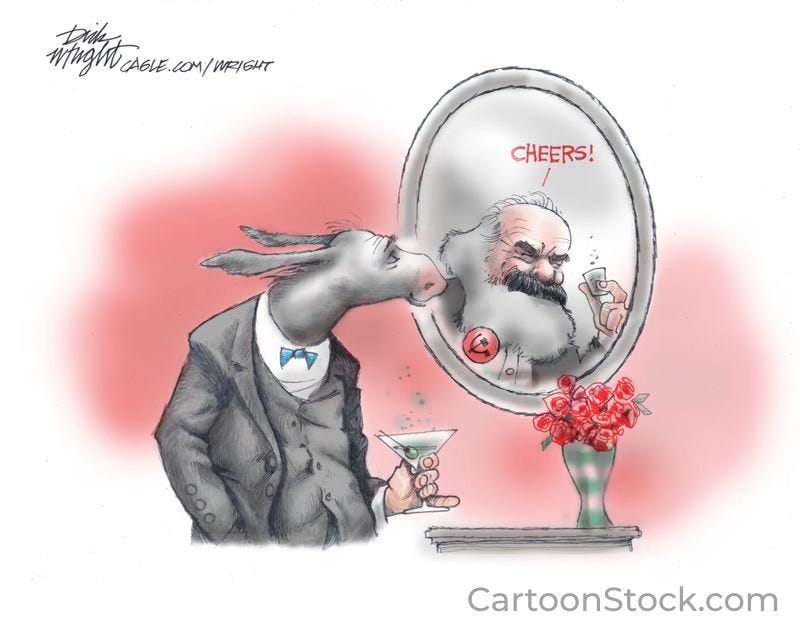
A PUBLIC INTEREST WARNING FOR SANTA BARBARA
In Santa Barbara, nearly every housing discussion begins with the same premise: we are in a crisis, and tenants must be protected.
That framing is often justified.
But it is no longer sufficient on its own.
Not all tenant advocacy focuses on improving housing conditions, preventing abuse, or keeping people stably housed. Some organizations advance a fundamentally different framework—one that rejects compromise, rejects market-based rental housing, and explicitly calls for the elimination of landlords and rent.
Is Santa Barbara Tenants Union and CAUSE Associated with ATUN?
That distinction matters, particularly as Santa Barbara City Council considers policy direction for a Rent Stabilization Program, including a rental registry, expanded enforcement mechanisms, and the possible use of a temporary rent increase moratorium.
This is not about labeling tenant concerns as extreme. It is about understanding how ideas translate into policy structures—and how those structures affect the long-term availability of housing.
What Some Tenant Organizations State—In Their Own Words
The Autonomous Tenants Union Network (ATUN-RSIA) describes itself as a North American collaborative of tenant unions. In its published “Points of Unity,” ATUN states that the interests of landlords and tenants are “fundamentally irreconcilable” and rejects strategies that encourage collaboration between the two.
In addition, it’s important to clarify the organizational context. According to the Autonomous Tenants Union Network itself, the Santa Barbara Tenants Union is listed as one of its member tenant unions in North America. ATUN’s public directory of affiliated unions includes Santa Barbara alongside other local tenant unions participating in its collaborative network.Autonomous Tenants Union Network
Their stated objective is not reform within the existing system.
“We fight for a world without landlords and without rent.”
— Autonomous Tenants Union Network, Points of Unity
ATUN also rejects framing current conditions as a “housing crisis,” arguing instead that the underlying issue is tenancy itself. From that perspective, increasing housing supply—whether market-rate or subsidized—does not address the core problem as they define it.
Their documents further state that resolving these conditions requires “overthrowing capitalism,” citing 19th-century political theory.
These positions are publicly available and plainly stated.
Why This Context Matters for Santa Barbara
Santa Barbara is not considering the abolition of private property or rent. However, the policy architecture now under discussion is significant.
The City’s current agenda item asks Council to provide direction on the development of a Rent Stabilization Program, with an ordinance targeted for July 2026. The work plan raises questions about:
Which rental units would be covered or exempt
How annual rent caps would be structured
Whether landlords could petition for cost pass-through
Enforcement mechanisms, including hearings and penalties
Creation of a rental registry
Whether to prepare a rent increase moratorium during ordinance development
Each decision is technical. Collectively, they establish a long-term regulatory framework governing private rental housing.
Santa Barbara is not only debating rent limits; it is considering a permanent regulatory and enforcement structure.
What a Rental Registry Means (Plain English)
A rental registry is a City-maintained database of rental units. As described in the agenda report, such a registry would typically include:
Number of rental units
Current rent levels
Allowable rent increases
Ownership and management contact information
The report notes that registries are commonly used to administer and enforce rent stabilization programs, and that more comprehensive registries require staffing, systems, and ongoing compliance oversight. In practical terms: a registry becomes the administrative foundation for rent regulation.
What a Rent Increase Moratorium Means (Plain English)
A rent increase moratorium is a temporary pause on rent increases.
The agenda report raises the option of preparing a moratorium for a defined period while a permanent rent stabilization ordinance is developed.
A moratorium does not determine final policy outcomes. It holds rent levels in place during the planning period, regardless of changes in operating costs, until permanent regulations take effect or the moratorium expires.
Just Cause and Rent Stabilization: Why Coordination Matters
Santa Barbara already enforces Just Cause Eviction protections, which regulate when a tenancy may be terminated. The agenda report notes that any rent stabilization program would need to be coordinated with those existing rules.
Just cause governs when a tenancy can end. Rent stabilization governs how rent may change. Together, they regulate both price and exit.
Administering this combination typically requires:
A hearing board or enforcement body
Petition and appeal procedures
Ongoing staff involvement
This represents an expanded municipal role in rental housing administration at a time when the City is also identifying future budget constraints (aka climbing deficit).
The Policy Question Before City Leaders
As Council considers how to proceed, one question deserves careful public discussion:
Is the goal to stabilize housing conditions, or to construct a regulatory framework premised on the assumption that private rental housing is inherently problematic?
That distinction matters because regulatory systems are durable. Once created, they are difficult to unwind, even if economic conditions change or unintended effects emerge.
If feasibility concerns are minimized, housing production may slow. If reinvestment becomes uncertain, older housing stock may deteriorate. These are not moral judgments; they are practical considerations documented across California housing policy.
A Public-Interest Warning
Tenant stability is an important public objective. So is housing availability.
Policy choices made today will shape whether Santa Barbara remains a place where housing is maintained, reinvested in, and expanded, or one where regulatory complexity gradually reduces supply and choice.
When organizations openly advocate for the elimination of landlords and rent, it is appropriate for public officials to distinguish those goals from the narrower objective of tenant protection.
Housing policy should be judged by long-term effects, not intentions alone.
Santa Barbara can protect tenants while remaining grounded in economic and operational reality. Doing so requires precision, transparency, and a clear understanding of where policy frameworks lead—before they are fully built.
In their own words!
Who We Are
The Autonomous Tenants Union Network (ATUN-RSIA) is a North American collaborative of tenant unions who have chosen to remain independent of nonprofits, big foundations, and government funding in order to build power that is responsive to and led by tenants. We are committed to base building, building leadership from the poorest, and resisting the power of real estate capital that destroys our homes and our communities.
We held our first online conference call in 2018 to provide space for mutual support among tenants unions across North America. The monthly calls attracted a growing number of tenant groups interested in combining grassroots organizing, advocacy, education, and direct action. With each call facilitated by a different autonomous tenants union, ATUN has hosted discussions on numerous topics that have helped strengthen the work of tenants unions across the continent. ATUN has been a connecting point for tenants to give practical support in tenant union campaigns across vast distances.
After holding online conventions in October 2020 and October 2021, we held an in-person convention in July 2022 in Los Angeles, bringing together 200 tenant organizers from 25 tenant unions across the United States.
ATUN’s Points of Unity
Tenants have always been in crisis. Since before the founding of the United States, property ownership has been a requirement for full political recognition. To be a tenant is to stand on the losing side of a class relation: we pay tribute to landlords because they own land and we don’t. And they own land because landlords before them expropriated the original peoples who still live here.
Today, as land is monopolized by fewer and fewer landlords and as rents continue to outpace wages dramatically, the crisis has engulfed even formerly housing-secure tenants. Working-class tenants are increasingly immiserated, and people who are shut out of the housing market altogether are subjected to encampment sweeps, police harassment, and vigilante violence. Tenants live in neglected, unsafe housing, we face harassment from landlords, and we experience the trauma of housing insecurity and eviction. Black and brown communities in cities, often created by racist segregation policies, now face destruction as developers, politicians, and police create and carry out gentrification plans using mass evictions and other forms of state-backed violence.
Resolving these crises will necessitate overthrowing capitalism and establishing a cooperative political and economic system. As Engels wrote in 1872: “As long as the capitalist mode of production continues to exist, it is folly to hope for an isolated solution to the housing question. The solution lies in the abolition of the capitalist mode of production and the appropriation of all the means of life and labor by the working class itself.”
We believe in the right to housing, the right to the city, and the right to stay put. We fight for a world without landlords and without rent. We fight to build tenant power in order to end the immiseration of the poor and working classes that housing represents under capitalism and to contribute to the struggle to end capitalism itself.
Points of Unity (adopted at founding convention in October 2020):
We are organizations run by and for our members. We are not under the direction of paid staff, boards of directors, or state agencies, and we are funded primarily by our members rather than by grants or major donors.
We define a tenant as anyone who does not have control over their housing. For us, “tenants” includes unhoused tenants, tenants who are squatting, tenants inside the carceral punishment system, tenants in nursing homes, in university housing, and in state institutions.
We fight for tenants, not for housing. We recognize that this is a crisis of tenancy, a crisis of our place in the overall system of social reproduction. Calling this a housing crisis benefits those who design, build, and profit from housing, not the people who live in it. Tenants are full political subjects who will not be liberated by secure housing alone.
We are not service organizations; we are movement organizations. As such we practice and build solidarityーnot charityーacross buildings, neighborhoods, borders, and language barriers.
We assert that the interests of landlords and tenants are fundamentally irreconcilable, and we reject any policy that attempts to paper over this conflict. While we do not rule out on principle the possibility of temporary truces and agreements between landlord and tenant, we advocate for a strategy of class struggle. Our overall political orientation consists of opposing strategies that encourage collaboration between class enemies.
We fight gentrification so that tenants can remain in their longtime communities and support networks. We define gentrification as “the displacement and replacement of the poor for profit,” and we understand that it is purposeful and produced. Because Black and brown communities are specifically targeted for displacement, we view the fight against gentrification as one component of the larger struggle against systemic racism. Those who benefit from gentrification, including landlords, developers, and lenders, and those who manage it, including the police and politicians, are highly organized and need to be met with an organized, militant tenant movement.
We stand in solidarity with tenants in struggle around the world. We insist that tenants share interests across borders and we seek to build tenant power accordingly. We strive to adhere to an internationalist and anti-imperialist orientation in words and deeds.
We support demands for Land Back by Indigenous peoples. Indigenous communities are some of the most deeply affected by the tenant crisis. The system of capitalism and private land ownership in “North America” is dependent on the ongoing theft of Indigenous lands and genocide of Indigenous peoples. Indigenous communities bring cultural knowledge necessary to our movement regarding kinship, community, and our relationship to land and place.
We support demands for reparations for descendants of enslaved Black people. We recognize that slavery and ensuing racist practices across centuries shape the conditions that tenants experience in the present.
We support fighting for anti-discrimination in housing practices for those who identify as LGBTQIA2S+.
We are committed to language justice and aspire to create fully language-accessible spaces. We believe everyone has the right to understand and be understood in the language in which they are most comfortable and that language justice is everyone’s responsibility.
We organize democratically and we are committed to fighting oppressive behavior and systems in and outside our ranks. We seek a membership and leadership that reflects the people most impacted by the crisis. We are engaged in an active struggle against the forces of systemic oppression within our communities which restrict access to resources, education, healthcare, and housing for marginalized groups of people. Within our unions we commit to learning how to deconstruct oppression and oppressive ways of working. We are bringing tenants together across lines of race, class, gender, gender identity, orientation, ability.
5 PM tonight live, City Council Santa Barbara City Council Agenda Packet Posted
Community Calendar:
Got a Santa Barbara event for our community calendar? Fenkner@sbcurrent.com


All this argues for is more Government jobs and intrusion into private affairs. Tragic. In an economic climate where the pensions and wages of Government employees soar above those of the private sector, this will take yet more rental housing out of the market and put it into short term rentals for tourists, undermining the hotels and bed tax.
Communism has never worked.