

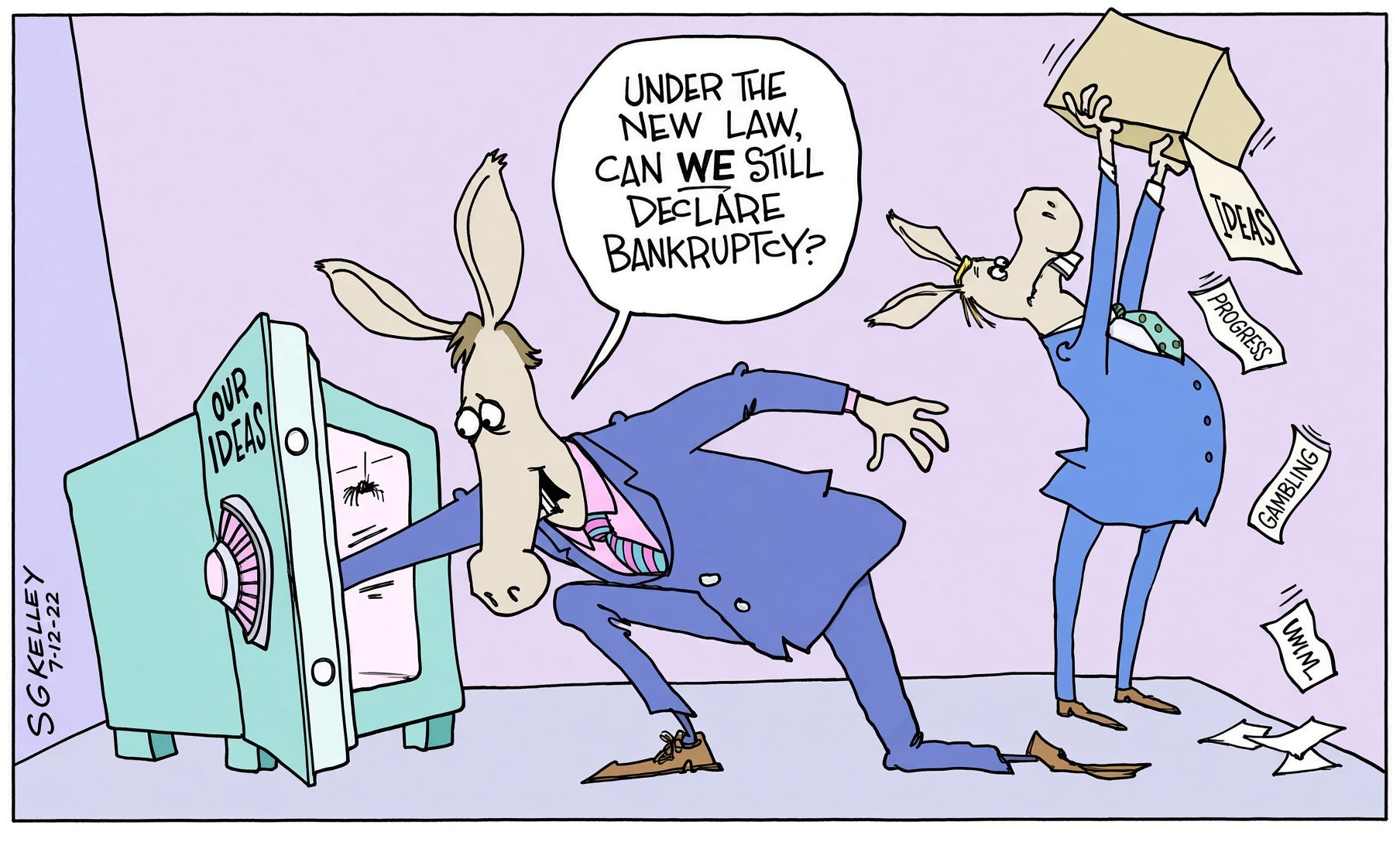
Santa Barbara’s November 3 election will determine who represents District 6 on the City Council. With depleted reserves, rising costs and major projects under consideration, taxpayers have good reason to examine the financial decisions and proposals of those seeking public office.
I wanted to discuss these matters directly with candidate Gabe Escobedo. I sent three emails requesting an in-person meeting—two to his campaign email address and one to his personal email address. As of October 14, I have received no reply. I do not know whether he read the messages or why he has not responded.
My invitation remains open.
What the Bankruptcy Records Reveal
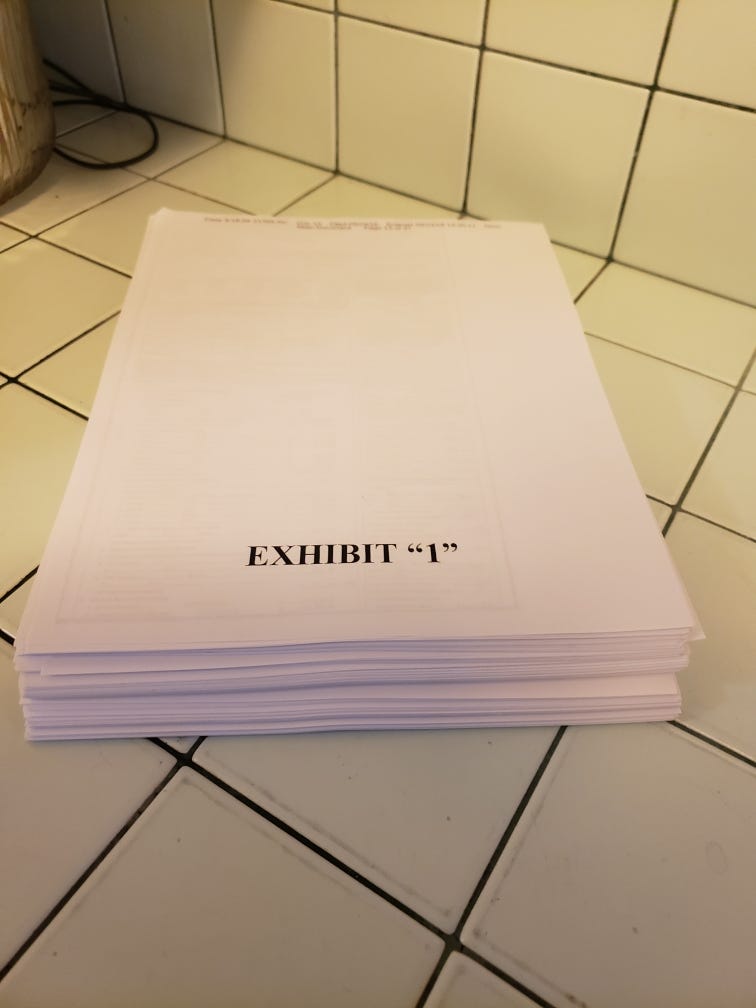
In September 2018, Escobedo filed Chapter 13 bankruptcy in the U.S. Bankruptcy Court for the Central District of California. His schedules reported approximately $192,323 in liabilities and $26,233 in assets, including two financed vehicles: a 2016 Jeep Cherokee and a 2011 Volkswagen GTI.
The Volkswagen was designated for surrender, and CoastHills Credit Union subsequently obtained court authorization to recover it. The trustee’s records eventually listed a $12,416 unsecured claim from CoastHills. The file does not establish the date the vehicle was physically repossessed or sold.
The bankruptcy also involved substantial student-loan debt. The Department of Education held an allowed claim of $133,009.85 and received $7,661.37 through the repayment plan.
Escobedo completed his five-year Chapter 13 repayment plan in September 2023 and received a discharge on April 25, 2024. According to the trustee’s final accounting, $9,068.18 was distributed to creditors. Although substantial balances remained unpaid through the plan, the documents do not establish that all were legally forgiven. Most federal student loans ordinarily survive an ordinary bankruptcy discharge.
Another document warrants clarification. In October 2022, the trustee sought dismissal, alleging that required tax returns and financial information had not been supplied to the trustee. The motion was withdrawn, and Escobedo subsequently completed the plan. That allegation did not establish that he had failed to file his tax returns with tax authorities.
Bankruptcy is a lawful process, and filing does not establish wrongdoing. These are nevertheless public records. I wanted to give Escobedo an opportunity to explain in his own words.
From Personal Finances to Public Decisions
Escobedo has also made public financial decisions as a Santa Barbara Unified School Board member. In July 2024, the board unanimously approved a teachers’ agreement providing a 10 percent raise for 2024–25 and another 5 percent for 2025–26, averting a potential strike.
In March 2025, Escobedo voted with the 3–2 majority to send preliminary layoff notices to 85 teachers. Many notices were subsequently rescinded after the district identified alternatives. The district’s September 2026 unaudited figures reported a $5.45 million General Fund deficit for 2025–26—far smaller than previously projected, but a deficit, nonetheless.
Declining enrollment, expiring one-time funding and other pressures affected district finances. Responsibility for its decisions rests with the board as a whole, not one member. Still, examining the forecasts and long-term costs considered when the board voted is reasonable.
Santa Barbara’s Own Financial Challenges
The City adopted a balanced FY2027 General Fund budget while acknowledging that depleted reserves need replenishing. Its State Street Master Plan carries an estimated implementation cost exceeding $96 million, including about $68 million in construction. Adopting the plan did not authorize spending the full amount.
Escobedo has publicly supported a car-free State Street and phased implementation. In published candidate responses, he has said he wants each phase’s costs, funding, and maintenance needs identified before committing tens of millions. At a forum, he also discussed grants, infrastructure financing districts, retirement incentives, reviewing vacant positions and first-year fee relief for Downtown businesses.
When Everything Is a Priority, Who Decides?
Santa Barbara cannot spend the same dollar twice. Aging streets and sidewalks, stormwater systems, fire facilities and dwindling reserves compete for attention. While some of State Street’s underground infrastructure work would be necessary even without the redesign—estimates include more than $17.5 million for utility relocation and $14.5 million for stormwater construction—how much discretionary reconstruction can the City afford?
If Escobedo supports implementing the plan, what would he postpone, reduce, or eliminate to pay for it? Would he commit future property-tax growth through an infrastructure financing district, and what would that mean for other City priorities? These decisions could create obligations lasting years.
Shouldn’t residents know what takes priority before new commitments are made?
The Subjects I Wanted to Discuss
My proposed interview covered the circumstances of Escobedo’s bankruptcy, why two financed vehicles appeared in his schedules, what happened to the surrendered Volkswagen, which debts survived discharge, and whether his student loans were later repaid or forgiven. I also wanted to discuss the withdrawn trustee motion and lessons from completing the repayment plan.
Turning to public finances, I wanted to review his School Board compensation and budget votes, subsequent staffing reductions and the district’s financial outlook. Finally, I wanted to examine the State Street price tag, possible grants and future tax revenues, long-term maintenance, Downtown-only business relief, rent-stabilization administration, housing subsidies, City-owned land, arts initiatives and retirement incentives.
For each proposal, the central question is the same: What will it cost, how will it be funded, and what other services or improvements might be delayed?
An Opportunity to Respond
I hoped to discuss these subjects with Escobedo face to face, allowing him to clarify the records and explain the financial safeguards he would support at City Hall.
Three emails requesting a meeting have received no reply as of this writing. That is not a refusal, and I am not suggesting otherwise. I remain willing to receive his responses, supporting documents or corrections. Or is this the same response we should expect from him if he is elected?
The upcoming election will determine who participates in decisions affecting hundreds of millions of public dollars, essential City services and Santa Barbara’s financial future. Santa Barbara taxpayers have already seen the consequences when spending pressures outpace recurring revenues and reserves are depleted. Before another City Councilmember takes office, the public should know what that candidate is prepared to spend, what can wait, and where the money will come from.
The decision for voters is their own. But the financial questions before Santa Barbara will not disappear after November 3. For every proposal involving public money, the starting questions should be:
What will it cost?
Where will the funds come from?
And, what else must wait?
•••
DYK endorsements coming…
******
Ballots are out.
If you plan to vote early, start with California Current’s proposition guide—written from the only point of view that actually pays the bill: the overworked, under-appreciated California taxpayer.
We don’t hand you a cheat sheet and walk away. Every recommendation is backed by clear headed research. Click the link, read the case, then mark your ballot with your eyes open.
Please consider sharing this easy-to-use guide with your neighbors.

NO on 1. The Con Job
NO on 2. Supersizing California’s Slush Fund
NO on 3. The Forever Tax
NO on 4. Your Money, Their Campaigns
NO on 5. Recall Revenge
NO on 37. Robin Hood in Reverse
NO on 38. Pork Barrel Science
YES on 39. Trust, but Verify
NO on 40. Tax Billionaires Today, Tax Everybody Tomorrow
YES on 41. Sergey’s Silver Bullets
YES on 42. Sergey’s Silver Bullets
YES on 43. Stop Getting Steamrolled by Special Taxes
NO on 44. Unions to Draw More Blood
YES on 45. Pondering Prop 45
Note: Props 41 and 42 share one article.
Community Events:

thank you and others for your being diligent in reporting these "issues".
What will it cost?
Where will the funds come from?
And, what else must wait?
All rational questions. The candidate should be willing to answer after all as a vote on the council is he or is he not a "spend thrift" willing to put more burden on the taxpayer.
Look at the history of failure of past councils, regarding Down Town Santa Barbara. The MIG street narrowing was and is a cancer that destroyed the heart of the largest economic engine in south county. Destruction of street capacity that draws visitors from 101 to downtown is not rational.
As Donovan states "Santa Barbara taxpayers have already seen the consequences when spending pressures outpace recurring revenues and reserves are depleted."
When you propose the same failure of narrowing and shutting down streets in the core of Old Town what does that say about understanding of history and failure?
The comment in this article "Santa Barbara cannot spend the same dollar twice. " Is telling.
Is the declining enrollment at the SBUSD a bell weather of long term issues in Santa Barbara? Who will pay the bill when more failure of a shutdown city center spreads?
There is so much more this piece brings up.
Thanks for this article