

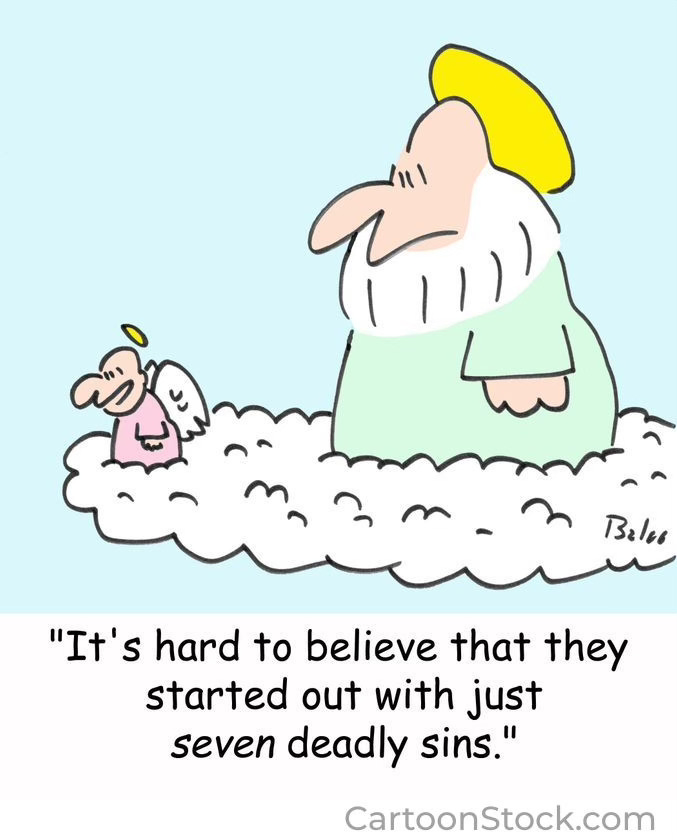
I last wrote a piece sequencing America’s transition from a nation of faith-seeking, family-oriented pilgrims to self-seeking, nihilistic pirates. This transition has happened in other societies, and it has always been marked via the demise of the nuclear family construct by way of divorce, foregoing marriage in the first place, and childlessness, as observed by the renowned British anthropologist, J.D. Unwin, in his study of some 86 societies and civilizations. The transition is also marked by a loss of faith in, and duty to, God, along with the loss of rational thinking skills.
Many times, this transition has occurred because of relative success in the world that caused societies and cultures to drift away from their moorings and suffer shipwreck. Suffice it to say, what people refer to today as progress is really a renewed form of cultural suicide. Regarding America, this all began in the 1960s.
In this piece, we will view events and values through a lens primarily focused on women, highlighting the impact on intact families and the nuclear family structure that once served to create stability and prosperity in our culture in every meaning of the word.
Next week, we will take a look through a lens focused on men.
1) The pill and abortion served to “liberate” women from pregnancy initially, and childbearing ultimately. The fact that the women’s liberation movement considered the defacto antithesis of maternal instinct liberating, speaks volumes. Meanwhile, it also deleteriously affected child-rearing. Because “a woman’s place” was no longer “in the home,” the purpose and value of home life was upended. The raising of children by way of nurturing and the inculcation of values became subordinated to the oppositive value of leaving the home to find “meaning” in work.
2) The Equal Pay Act of 1963 gave women in the workplace the right to equal pay for equal work. Whereas, that sounds fair on the surface, the previous thinking was that men were heads of households and they needed higher pay because they had to support their wives and families at home. The subsequent lowering of pay for men now forced mothers out of the home into the workplace while displacing their extremely vulnerable children into preschools, which offer all the nurture of an orphanage, and after that, modern society created the phenomenon of latchkey kids.
3) The welfare system created in the 1960s financially rewarded mothers to have no man in the home even if they were married. What is worse, having a baby out of wedlock created a revenue stream for unemployed single women.
4) The women’s liberation movement not only encouraged women to forego child rearing, it also encouraged single women to begin families on their own and to pursue equality with men in the marketplace as a source of fulfilment. Thereby, stay-at-home wives and mothers began to be looked down upon as old-fashioned and oppressed.
5) The combination of the pill, abortion and the women’s liberation movement coincided with the free sex movement and shacking up. Sexuality triumphed over self-control and chastity. Per Unwin, when any society forsook prenuptial chastity, a form of human entropy evolved, that is, a gradual dissent into disorder. Why was this so important? Because it opened a pandora’s box that served to weaken the bonds of life-long absolute monogamy and fidelity.
6) No-fault divorce laws made divorce easy and quick, and courts favored mothers for primary custody, thereby leaving a significant number of children in a fatherless home, which is the leading indicator of nearly every modern social ill in our society today, including criminal behavior, suicide, homelessness, and drug and alcohol abuse.
7) God was declared dead; God-given maternal instinct was put on life support, and the results are in.
Community Calendar:


Got a Santa Barbara event for our community calendar? Fenkner@sbcurrent.com
A WIKI Primer on the Seven Deadly Sins: In the standard list, the seven deadly sins ....... are pride, envy, wrath, gluttony, lust, sloth, and greed.
Not to be confused with the Democrat party platform in California.
Thank you for this concise history. The 1960's were far more pivotal than just The Age of Aquarius, sex, drugs and rock and roll. Or even the birth of government employee unions. Those years did gut the moral fiber of our nation. But we must accept there was need for changes, that drove us into untested social experiments at that time too.
The upside is since so much changed in one decade; everything can change just as much in this decade. That brave new 1960's world of shattered social morés, remains fractured and tattered presenting need to changes today too.
1960's psychologist Rollo May foresaw this era trading passion for lust, which would be the generation's downfall. Worth the re-read to learn how he defined both terms. Passion runs deep with commitment and consequences. Lust is shallow, immediate and reckless.