

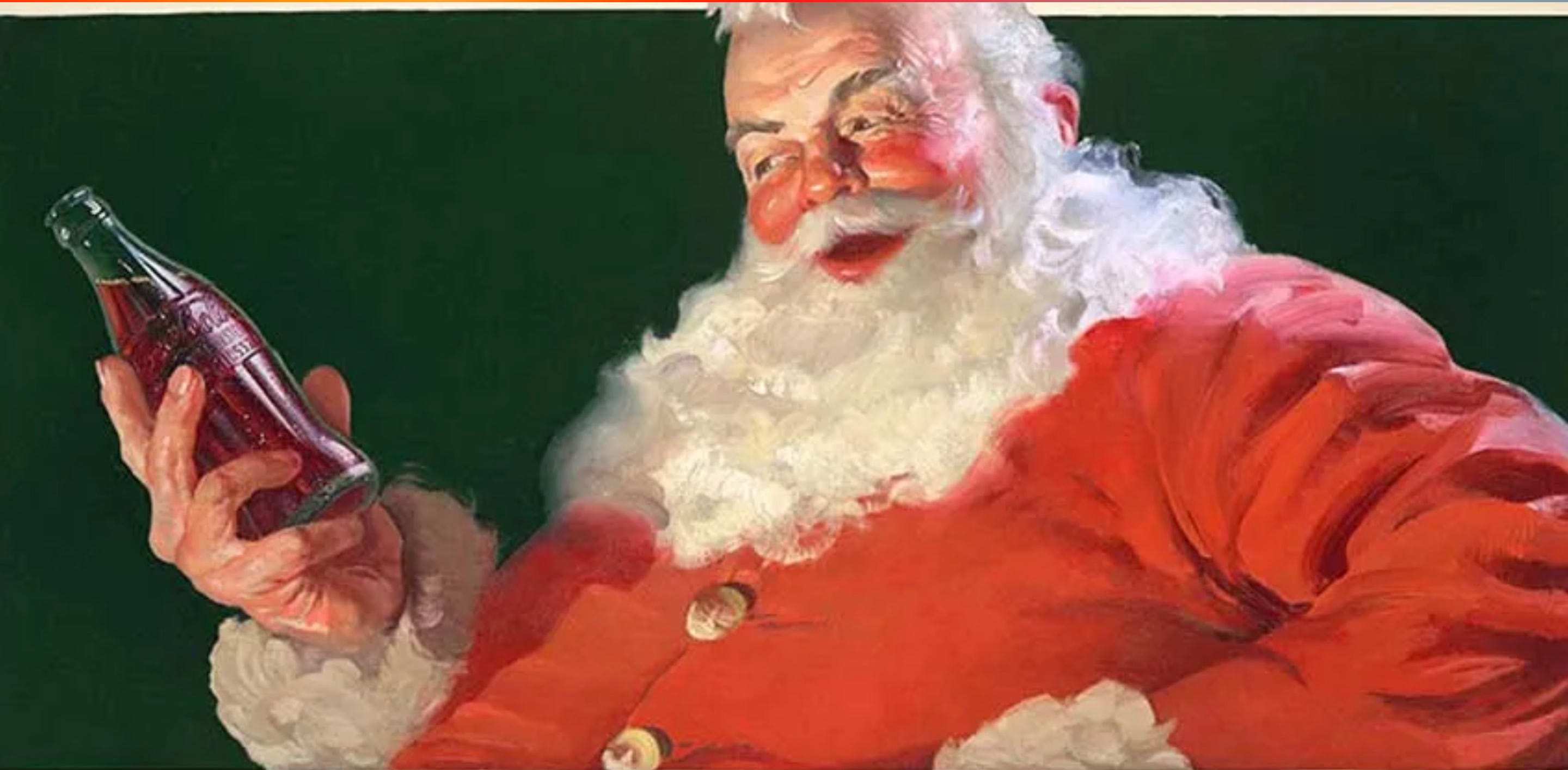
Did you know that Santa Claus was actually a person? Stories of his holy and generous life were part of his legacy. Nicholas, who was born in the third century AD is the story of modern day Santa Claus. He lived in Asia Minor, known today as Turkey.
His parents saw their son as a very devoted and prayerful young man. His uncle, the previous bishop of Myrna, took him under his wing and mentored him about the Lord and the budding Christian faith. Eventually Nicholas became a bishop himself. His wealthy parents died and left him a fortune.
One of his most well-known acts of generosity was helping three sisters avoid being sold into slavery and prostitution. Their father, a wealthy merchant, had gone bankrupt. In those days authorities would take everything you owned including your children and sell them as indentured servants. The only way the girls could get out of a life such as that was by getting married. But, to do that, each one needed to have a dowry.
So, after Nicholas heard about this father’s plight, he walked by the nobleman’s house in the darkness of night (in order to remain anonymous) and threw a bag of gold in their window for the first daughter. He did the same thing for the following two nights for the second and third girls; all three were set free from a life of servitude. After that, stories of Nicholas’s philanthropy spread far and wide. He was a gift giver, like Jesus, as well as a miracle worker.
According to the story, Nicolas became the patron saint of pawn brokers, who saved people from financial ruin by buying their goods. And that is why you see three gold balls hanging outside pawn shop windows, representing the three daughters. Nicholas became one of the most venerated saints in both the East and the West and was known not only for his generosity and secret gift giving, but also for his faith, generosity, and courage. He died on December 6, which has come to be known as a day of secret gift giving.
Nicholas’s relics were moved from Myra, Turkey, to Bari, Italy in 1087. What began as a commercial fishing expedition eventually took on a sacred purpose. The Bari sailors, who had traveled to Antioch on a trading mission, learned that Venetian rivals were planning to steal the saint’s bones. They arrived before the Venetians, went to Myra, and absconded with the relics of the saint. When they returned to Bari, they decided to build a magnificent Basilica, which would naturally house the relics of St. Nicholas
In the Middle Ages, devotion to Nicholas extended to all parts of Europe. He became the patron saint of Russia and Greece; of charitable fraternities and guilds; of children, sailors, unmarried girls, merchants, and pawnbrokers; and of such cities as Fribourg in Switzerland, and Moscow. Thousands of European churches were dedicated to him—one, built by the Roman emperor Justinian I at Constantinople (now Istanbul), as early as the 6th century.
After the Reformation, devotion to Nicholas disappeared in all the Protestant countries of Europe except Holland, where his legend persisted as Sinterklaas (a Dutch variant of the name St. Nicholas). Dutch colonists took this tradition with them to New Amsterdam (now New York City) in the American colonies in the 17th century. Sinterklaas (and his helper Zwarte Piet) was adopted by the country’s English-speaking majority under the name Santa Claus.
In 1823 an Episcopalian priest known as Clement Moore had six children and had written a poem for his family called “a visit from Saint Nicholas.”
Being the first identifiable author to mention Nicholas in a sled being pulled by reindeer, Moore gave his amusing description of the saintly Bishop of Myra:
“Twas the night before Christmas,
when all through the house,
not a creature was stirring,
not even a mouse.
The stockings were hung
by the chimney with care,
in the hope that Saint Nicholas
would soon be there.
The children were nestled
all snug in their beds,
while visions of sugar plums
danced in their heads,
and mama in her car
and I in my cap
had just settled our brains
for a long winter‘s nap,
went out on the lawn,
and there arose such a clatter.
I sprang from the bed
to see what was the matter!
Away to the window
I flew like a flash,
tore open the shutters
and threw up the sash;
the moon on the rest
of this new fallen snow
gave the luster of midday to objects below;
when what to my wondering
eyes should appear
but a miniature sleigh
with eight tiny reindeer
with a little old driver
so lively and quick,
I knew in a moment
it must be Saint Nick.
More rapid than eagles,
his course as they came
and whistled and shouted
and called out the names,
“Now Dasher, now Dancer,
now Prancer and Vixen,
on Comet, on Cupid,
on Donner and Blitzen,
to the top of the porch
to the top of the wall ,
now dash away, dash away,
Dash away all.”
Merry Christmas to every one of Santa Barbara Current’s +60,000 Readers!
*****
Community Calendar:
Got a Santa Barbara event for our community calendar? Fenkner@sbcurrent.com
Silent Night.
https://www.youtube.com/watch?v=hP-hPTsC_6A
PS1-Yes Monica .... Very good rendition and simple.
Merry Christmas, Mary! Maybe Santa might bring your daughter a better boyfriend?