
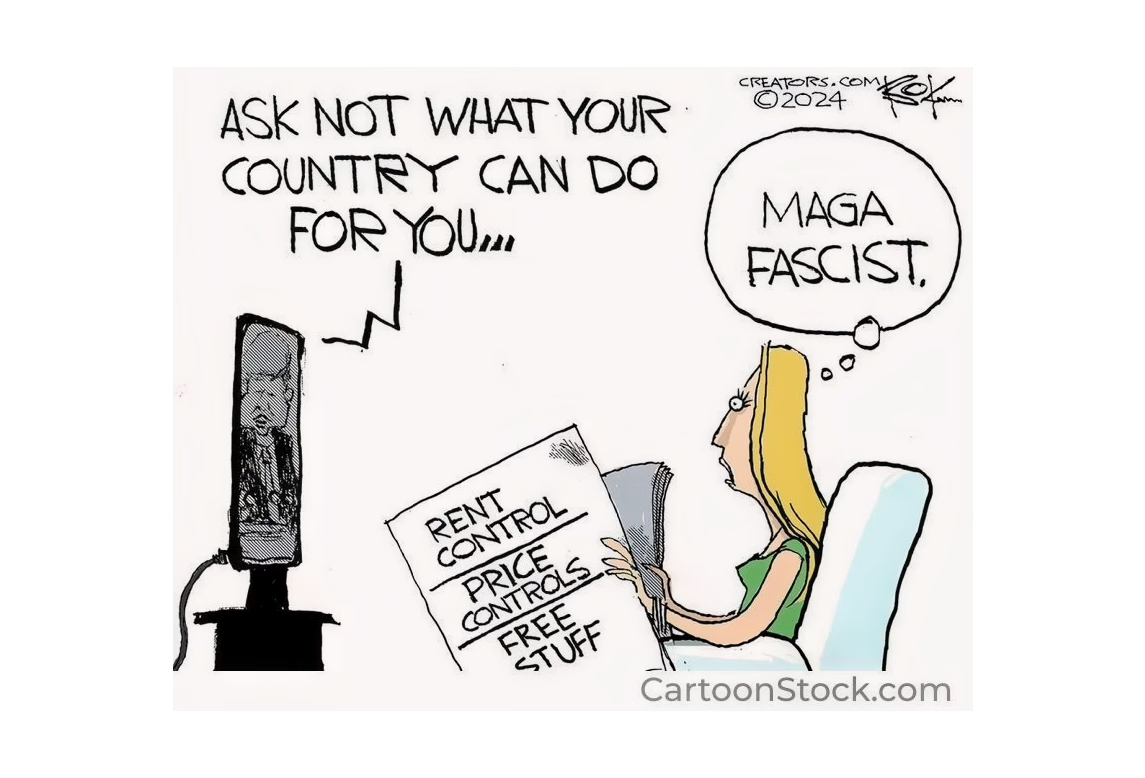
What's behind Santa Barbara's "Emergency" Rent Freeze ?
Essays by Lydia Perez, Loy Beardsmore and Kevin Boss
(The following three thoughtful and perhaps contentious pieces were written in expectation and preparation for Santa Barbara City Council’s upcoming rent freeze vote scheduled for Tuesday, January 13th beginning at 2pm.)
Santa Barbara’s “Emergency” Rent Freeze
By Lydia Perez
Politics First, Housing Second
Santa Barbara is being asked to accept an emergency rent freeze as though it were the only moral choice: urgent, unavoidable, and overdue.
But when you look closely at how this proposal came about, a different picture emerges. One that has far less to do with sound housing policy, and far more to do with political timing.
An “Emergency” Created by a Memo
The current push for a rent freeze did not emerge from a comprehensive housing study, a years-long planning process, or broad community collaboration.
It began with a two-person memo filed in October by Councilmembers Wendy Santamaria and Kristen Sneddon, requesting that rent stabilization, including a possible rent freeze, be brought before the City Council.
Within weeks, the issue was fast-tracked. By December, City Council was already being asked to consider emergency action, bypassing the kind of economic analysis, stakeholder engagement, and deliberation that policy of this magnitude demands.
That alone should give residents pause.
Emergency ordinances are meant for earthquakes and wildfires, not for policies that permanently reshape an entire housing market.
Timing Matters, Especially in an Election Year
Timing matters in politics, and it matters here.
Councilmember Sneddon has announced she is running for mayor. Her likely opponent, Mayor Randy Rowse, has been publicly sceptical of rent control-style policies.
The memo appeared in October. The issue was heard in December. And now, an emergency rent freeze is being framed as a moral imperative, just as campaign season accelerates.
Is it a coincidence? Readers can decide for themselves.
But it is fair, and necessary, to ask whether Santa Barbara is being asked to accept sweeping housing policy based on what plays well politically, rather than what actually works for the people who live here.
Who Really Provides Housing in Santa Barbara?
Lost in the rhetoric is a basic reality: Santa Barbara’s rental housing is overwhelmingly provided by small, local, “mom-and-pop” owners.
These are retirees with duplexes, families with a few units, longtime residents who invested locally and stayed local. They are not hedge funds. They are not faceless corporations.
And they are already under intense pressure:
Insurance costs have doubled or tripled
Maintenance and labor costs are up sharply
Utilities, taxes, and regulatory compliance continue to rise
Financing costs are the highest they’ve been in decades
A rent freeze does not freeze those costs. It simply freezes income.
The predictable result is deferred maintenance, delayed repairs, and owners exiting the rental market altogether.
That doesn’t help tenants.
It hurts them.
The Evidence Is Clear: Rent Freezes Don’t Deliver
This isn’t speculation. It’s well-documented.
Cities that adopt strict rent freezes see reduced housing supply, less reinvestment in existing units, and declining housing quality over time. Even places with long-standing rent control programs have found that such policies often reduce available rental housing and increase long-term rents by discouraging new supply and pushing small owners out.
Santa Barbara already has too little housing. We cannot afford policies that shrink it further.
Politics Is Not Housing Policy
Housing policy is hard. It requires patience, compromise, and honesty about trade-offs. There is no free lunch.
But emergency rent freezes offer something politics always craves: a clear villain, a simple slogan, and immediate applause.
That may be good campaign strategy. It is not good governance.
If City Council truly wants to protect tenants, it should slow down, study the data, and engage everyone affected, including the people who actually provide housing.
Santa Barbara Deserves Thoughtful Leadership
This city has a long tradition of careful, community-driven decision-making. We should not abandon that tradition now.
Before rushing into an emergency rent freeze born of a two-person memo and propelled by political momentum, City Council should ask a harder question:
Are we solving a problem or staging a moment?
Santa Barbara’s renters, housing providers, and future residents deserve policies rooted in evidence, not election cycles.
This is not about personalities or elections, but about process, consequences, and responsible housing policy. Housing is too important to be reduced to politics.
•••
A “Short-Term” Measure
By Loy Beardsmore
A “Temporary” Rent Freeze That Quietly Lasts for Years
Supporters of Santa Barbara’s proposed rent freeze describe it as a short-term, emergency measure — a pause while the city works out a permanent rent stabilization ordinance. But when you look closely at how the policy actually operates, it becomes clear that this “temporary” freeze can lock rents in place for years, not months.
Here’s why:
Under the proposal, rents are frozen at their December 16, 2025 level. At the same time, landlords are legally required to offer tenants one-year leases. That combination has consequences few people are talking about.
If a rent freeze is in effect when a one-year lease must be offered — say June 1, 2026 — the landlord must set the rent at the frozen amount. Once that lease is signed, the rent is locked for the full year. Even if the rent freeze expires a few weeks later, or a permanent rent stabilization ordinance takes effect with a modest annual increase allowed, the rent cannot be adjusted mid-lease. The frozen rent carries through to the end of that one-year contract.
In other words, a freeze that’s advertised as lasting until summer 2026 can, in practice, suppress rent increases well into 2027 — or longer.
It doesn’t stop there. Any rent increases that were legally taken after December 16, 2025 are not erased; they are counted against future allowable increases under a permanent ordinance. That means landlords who adjusted rent to keep pace with rising insurance, utilities, or maintenance costs, have already “used up” years’ worth of future increases. For some properties, this translates into a multi-year period with no ability to raise rent at all.
This is not a loophole. It is the system working exactly as designed.
The real-world impact is a stacking effect: a temporary freeze, layered with mandatory one-year leases, layered again with retroactive accounting of past increases. The result is a much longer and much tighter restriction on rental income than most residents realize — and far longer than the word “temporary” suggests.
These policies don’t just affect large corporate landlords. In Santa Barbara, much of rental housing is owned by small, local owners: retirees relying on rental income, families renting out a second unit, longtime residents trying to cover escalating costs. When rents are frozen while expenses continue to rise, owners are forced into difficult choices: defer maintenance, stop improvements, or exit the rental market altogether.
A policy meant to provide stability can ultimately reduce housing quality and supply.
Reasonable people can agree that renters deserve protection and predictability. But meaningful policy requires honesty about trade-offs. A rent freeze that quietly extends itself through mandatory leases and future caps isn’t just a pause — it’s a long-term financial restructuring of housing, enacted without fully acknowledging its reach.
Santa Barbara deserves a housing policy that is transparent, balanced, and rooted in real-world impacts — not one whose consequences only become clear after it’s already law.
•••
A Political Tour de Force
By Kevin Boss
Dear Kristen Sneddon,
Wanted to send you this review of your performance at the last City Council Meeting on 12/16. ( Council video from 5:55:30 )
It was a 23-minute tour de force! An epic display of simpering emotion, of ignorant or intentionally misleading economic analysis, and frightening disregard for the Constitutional Rights of property and business owners.
In an effort to create emotional solidarity with the Rent Control factions—sorry, Rent Stabilizers—you trotted out a single “chart” showing something, you never really said what, about the rents and values of a “rent controlled” apartment your family leased in the early 1970s.
Using this chart you “factually, lovingly” said it showed property values rising with rents over a 50ish-year period. You told the chamber you had “spread sheets” and had “run numbers for whole areas”—but neglected to detail them. I suppose you were trying to show that property values rose, even in a rent controlled environment.
You asserted that values and “wealth” increased simply by existing over an extended time.
Amazingly you asserted that these increases were “profit.”
You said “my heart told me that it (rent control) works.”
Clearly you do not understand that gains in property values do not represent “profit.” Your former landlord, any landlord, will not “realize profit” from that property until it sells. Those are “realized gains,” actual “profit.” Any money they make prior to selling is “income.”
And, as long as we’re at it, you should know that the value of $1 in 1972 is now almost $8. Clearly that 800% inflation increase would have to be calculated in estimating any real “profit” you claim.
Finally, it was deceptive for you to not tell the Council and the public that this property is located in Beverly Hills—for what that’s worth.
The most troubling part of your long soliloquy was a statement you made about a mandatory Rent Registry. You said “honestly I don’t understand, if you’re running a business, I don’t understand what the privacy issue is… If you’re running a business on State St. or you have residual receipts (whatever that means)…“
You said “maybe someone can reach out to me and explain it.”
OK, Kristen here’s an explanation—of sorts—to that staggeringly authoritarian and unconstitutional statement.
What makes you think you, as an elected official, have any right to know the financial details of any business? Other than authorized Federal, State, and Local tax and regulatory officials, no public official or elected official has the right to demand to know how much a business pays its purveyors or its employees. You, as an elected City Council member, have no right to see my books, dictate who I do business with, or interfere with transactions with my tenants or my customers. Do you really believe the City Council has the right to dictate the prices a business charges for its goods or services?
If I thought you’d understand, I’d simply suggest you read the U.S. Constitution—especially the Bill of Rights. I’d recommend you pay special attention to the 5th and 14th Amendments.
But for now how about just the 4th Amendment: “The right of the people to be secure in their persons, houses, papers, and effects, against unreasonable searches and seizures, shall not be violated, and no warrants shall issue, but upon probable cause, supported by oath or affirmation, and particularly describing the place to be searched, and the persons or things to be seized.”
Pretty sure the SB City Council swore to uphold this document when you took office. Remember?
Your totalitarian impulses should be disqualifying factors in your aspirations to be Mayor of Santa Barbara.
Finally, Kristin, your responses to Mayor Randy Rowse’s comments on your recent, very explicit, use of the words “the collective” in the Jerry Roberts interview rang hilariously false. You lamely attempted to say you meant the whole City Council as a “collective.” (Council video from 6:49:00 and 6:52:00)
Given the recent media attention allotted to the words “collective” and “collectivism” thanks to the newly elected Mayor of New York City, it would seem you are trying to run from an association with the true historical meaning and intent of those words.
What’s next from you? “From each according to his ability, to each according to his needs”?
Be honest.
Best,
Kevin
Kevin Boss has been a business owner and downtown property owner since 1983.
Community Calendar:
Got a Santa Barbara event for our community calendar? Fenkner@sbcurrent.com


Kevin-Your command of basic economics has placed Sneddon to the woodshed-where she belongs. Thank you.
Superbly written. I went to the last meeting and spoke but can not attend this one. Can somebody please publicly ask the council for a show of hands ‘how many of you would vote right now for a plan that calls for a revenue freeze for the city but allows city expenses to climb unchecked. Show of hand please” expose the hypocrisy publicly at the meeting. Please someone do it.